
Rodent Removal in Vista, CA
Vista's rolling hills were oak groves and avocado ranches before the post-war tracts arrived, and the trees that stayed now touch the rooflines. One call books a free attic and roofline inspection from a registered contractor.
- Free attic and roofline inspection
- Phone answered 24 hours a day
- SPCB Branch 2 registered contractors
Free Inspection in Vista
The free inspection in Vista covers the roofline, the attic and the slope the house sits on. Whoever attends walks the eave from a ladder for open rafter tails, bent soffit panels and vent screens that have rusted, then goes into the attic with a light to read droppings, rub marks and the flattened runs in the insulation. Vista's hillside lots put one side of many houses close to the ground and the other high above it, so the low side gets checked at ground level for gaps under the siding and the high side from the ladder. The written findings separate trapping, sealing and cleanup with a price beside each.
Vista sits in the North County hills inland from Oceanside, roughly forty minutes from downtown San Diego by Interstate 5 or 15 outside rush hour, and the contractors we route there cover the coast and the inland valleys alike. The phone is answered 24 hours a day. Book a free inspection and say what you hear, where, and since when.
Over nine in ten Vista houses were built after 1950, and the eaves are open
Vista was an agricultural town on the rail line between Escondido and Oceanside through the 1920s, incorporated as a city in January 1963 with a population already past nineteen thousand, and its own housing element records that more than 90 percent of its dwellings date from after 1950. The stock that number describes is post-war ranch houses on sloping lots, then the tract booms of the 1970s through the early 2000s that filled the hills. The ranch houses have open eaves with exposed rafter tails and light gable screens; the later tracts have stucco under concrete tile with the first course open at the eave.
Both are roofline entries, and on a Vista slope the roofline is also close to the ground on the uphill side. A rat that reaches the low eave from a retaining wall or a shrub walks straight into an open rafter bay. Rodent exclusion on a Vista ranch house is hardware cloth in every open bay and behind every gable screen; on a tile-roof tract house it is a manufactured metal bird stop along the eave course, the closure the Department of Energy recommends for tile roofs.

Avocado remnants and oak groves are the road to the roof
Vista made its name on avocados, and the hillside lots still carry remnant avocado trees, old oaks and the palms planted with the tracts, many of them tall enough now to rest on a roof. The University of Florida extension describes the roof rat as a climber that travels along branches, wires and palm trunks, and an avocado limb over the garage is as good a bridge as a palm skirt. Fallen fruit under the tree feeds the colony, and the wet creek bottoms between Vista's hills give it somewhere to live when the house is closed.
The cheap half of the fix is pruning: limbs cut well back from the roof, palm skirts trimmed, fruit picked up. The lasting half is the sealed eave, because a roof rat ranges about 150 yards from its den and the next avocado tree is inside that distance on almost every Vista street. Roof rat removal runs the trapping in the attic while both halves happen around it.
What We Handle in Vista
The services Vista calls for most are roof rat trapping in ranch-house and tile-roof attics, eave sealing, and the attic cleanup that follows a long infestation under a slope-side tree.
- Roof rat removal: snap traps on the attic runs, left at least a week because roof rats avoid new objects, checked and reset until the attic goes quiet.
- Rodent exclusion: hardware cloth in open rafter bays and behind gable screens on the post-war stock, a metal bird stop along the tile eave on the tracts, and a metal collar at the air conditioning lines.
- Rodent inspection: free, covering both sides of a hillside house, the attic and the trees, with a written plan priced line by line.
- Attic cleanup: droppings and soiled insulation removed and the attic sanitized after the sealing.
- Attic insulation replacement: new material where the old fill was flattened into runs, by a contractor with the CSLB license for it.
- Poison-free rodent control: the program California's rodenticide law leaves at a Vista home, and why bait under an avocado tree ends with a smell in the wall.
A Typical Vista Job
The situation: A retired couple in a 1960s ranch house on a Vista hillside hear something moving along the eave outside the bedroom window at dusk and then overhead after dark. An old avocado tree on the uphill side leans on the roof. They have been sleeping in the front room to get away from it and feel a little foolish saying so.
What gets done: The inspection finds the rafter bays along the uphill eave open to the attic, a gable screen chewed through, and roof rat droppings along the top plate above the bedroom. Snap traps go on the runs that afternoon. The gable gets quarter-inch hardware cloth, every open bay along the eave is blocked with metal, and the couple has the avocado limb cut back from the roof. The last two bays over the active run are closed once the traps have been quiet for a week.
How it turns out: Three rats trapped in the first nine days and none after the eave is closed. The closure list names each rafter bay and the gable with the material used, and the couple moves back into their own bedroom.
What This Costs in Vista
A Vista rodent job runs inside the published national bands, and the number of open rafter bays along a ranch-house eave is what moves the sealing line up or down.
| Work | National band (HomeGuide 2026) |
|---|---|
| Inspection | Free with us; elsewhere $0 to $175 standalone |
| Trapping and removal | $250 to $1,200 |
| Full-home exclusion | $500 to $2,500 |
| Attic cleanup and decontamination | $600 to $2,500 |
| Insulation removal and replacement | $2.50 to $5.50 per square foot |
| Dead rodent removal | $150 to $500 |
A small ranch house with a dozen open bays along one eave sits in the lower half of the exclusion band. A two-story tract house with tile on four eaves and vents on both gables climbs toward the top. The figures are national, labeled so because no San Diego survey exists, and each is confirmed at the free inspection. Ask for the trapping, sealing and cleanup lines separately, and ask whether a return visit is included in the price.
The order an attic job runs in
Five stages, from inspection through to cleanup.
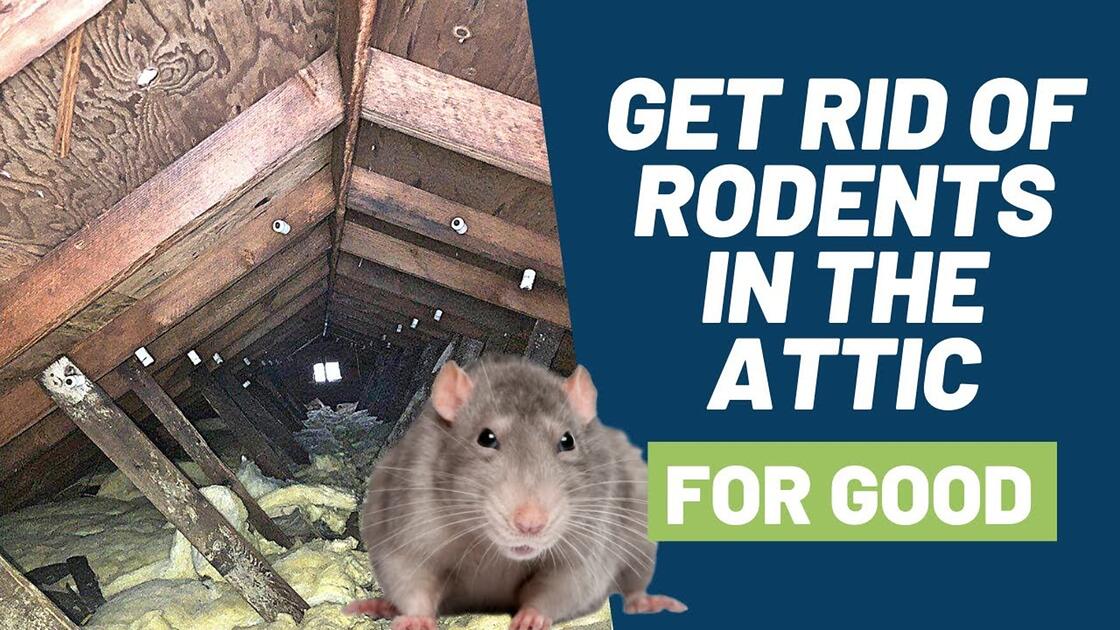
Video: 5 Step Solution to Get Rid of Rodents in Your Attic, from Atticare Construction.
Common Questions in Vista
What callers from Vista ask before they book.
How long does it usually take to get rid of rats in Vista?
Most Vista jobs run two to three weeks from the first visit to the last blocked rafter bay. The national guides give two to three days for a small number of animals and one to two months for a severe infestation; leaving the traps at least a week matters because roof rats avoid anything new in their run. A ranch house that has carried rats through several seasons, with runs worn into the insulation, sits toward the longer end, and the sealing is what stops the timeline repeating.
Is it safe to do exclusion before trapping?
Yes, when the two run as one program. The openings with no traffic are closed on the first visit, the active runs are trapped with the last opening left for the animals to use, and that opening is closed once the traps go quiet. Closing everything at once with rats still inside sends them looking for a new exit, which on a ranch house is often down into a wall. The contractor we route sequences it so nothing gets shut in.
Does the tree leaning on my roof have to come out?
No. The limb on the roof has to come off the roof, and the eave under it has to be closed. Roof rats are climbers that reach the house along branches, and a limb resting on the shingles is a bridge; pruning it back removes the bridge without removing the shade. Because the species ranges about 150 yards from its den, the pruning only holds if the rafter bays and the vents are sealed in metal as well.
Who is licensed to do this work in Vista?
Rodent control for hire in California is Branch 2 work under the Structural Pest Control Board, and every contractor we route into Vista works for a company that holds a PR registration. Ask whoever attends for the number and confirm it at pestboard.ca.gov before the ladder goes up, and ask for proof of insurance. Insulation replacement, when the attic needs it, is routed to a contractor with the Contractors State License Board license for that work.
One call books the free Vista inspection, any hour of the night.
Nearby Areas We Serve
The same contractors cover the cities around Vista, and the service area is the whole of San Diego County.

Book a Free Inspection in Vista
A free inspection on a Vista hillside house finds the open bays, the chewed screens and the limb on the roof, and prices the trapping, the sealing and any cleanup as separate lines. The phone is answered 24 hours a day.