Free Rodent Inspection in San Diego, CA
A free rodent inspection is where every San Diego rat job starts: the roofline, the attic, the crawl space and the trees walked in one visit, with written findings that separate what is inside, how it got in, and what it will cost to fix.
- No charge for the inspection
- Roofline, attic and crawl space
- Written findings and itemized quote
What a free rodent inspection in San Diego includes
A free rodent inspection in San Diego is a walk of the whole building shell and the yard around it by a Branch 2 registered contractor, ending in written findings and a quote with trapping, sealing and any attic work on separate lines. It costs nothing, and it is the visit that decides what a house needs before anyone sells it anything.
Whoever attends brings a ladder, a flashlight and a notebook, and works from the roof edge down. The inspection covers the outside, the attic and, on a raised foundation, the crawl space, and it ends at the kitchen table with the findings explained. The trapping that usually follows is on the roof rat removal page and the sealing on the rodent exclusion page.
- The roofline from a ladder: tile eave and bird stops, open-eave bays, fascia, gable and ridge vents
- The attic: droppings, runs, gnawed wiring and framing, disturbed insulation, nests, daylight at the eave
- The crawl space on a raised foundation: vent screens, the sill line, the hatch, droppings on the mudsill
- Exterior harborage and bridges: palm skirts, ivy, citrus and fruit trees, woodpiles, branches and lines touching the roof
- Ground-level openings: garage door sweep, utility penetrations, doors and thresholds
- Species identification from droppings, sounds and location
- Written findings and an itemized quote, with photos where access allows
People book this visit after a week of lying awake and a friend telling them it is only a mouse. The inspection replaces guessing with a list.
Signs that it is time to book an inspection
It is time to book a rodent inspection when there is any noise in the ceiling or walls after dark, when droppings turn up in the garage or attic, or when a house is about to change hands and the buyer or lender wants the roofline and attic looked at. An inspection before the noise starts is also worth having on a canyon-rim or palm-heavy lot.
- Running, scratching or gnawing overhead between dusk and dawn
- Droppings the size and shape UF/IFAS assigns to roof rats, a quarter to half an inch with pointed ends, along joists or on the garage floor
- Chewed fruit on a citrus tree, eaten from one side
- Gnaw marks at the eave, a vent screen or a garage sweep
- A musky smell at the attic hatch or from a wall
- A previous company's traps or bait stations with no closure list to show what was sealed
- An escrow, a rental turnover or an insurance question that needs a written report
Between October and February the calls come faster, because cooler nights and the first rains push San Diego roof rats indoors, and the inspection calendar fills after the first storm and again after the holidays.
What does a rodent inspector look at?
The inspection walks six zones in order, from the roof edge to the trees, because a roof rat in San Diego arrives from the landscape and enters at the roofline, and the crawl space on an older house is the second door. Each zone has its own list.
Roofline and eaves
The roofline is checked from a ladder for the openings a climber uses: the gap under the first course of clay or concrete tile where a bird stop is missing or crushed, the open bays between rafter tails on a Craftsman or ranch eave, chewed fascia, and the screens on gable, attic and ridge vents. The US Department of Energy lists bird stopping among its measures for tile roofs, and a tile house is checked course by course along every eave.
Attic
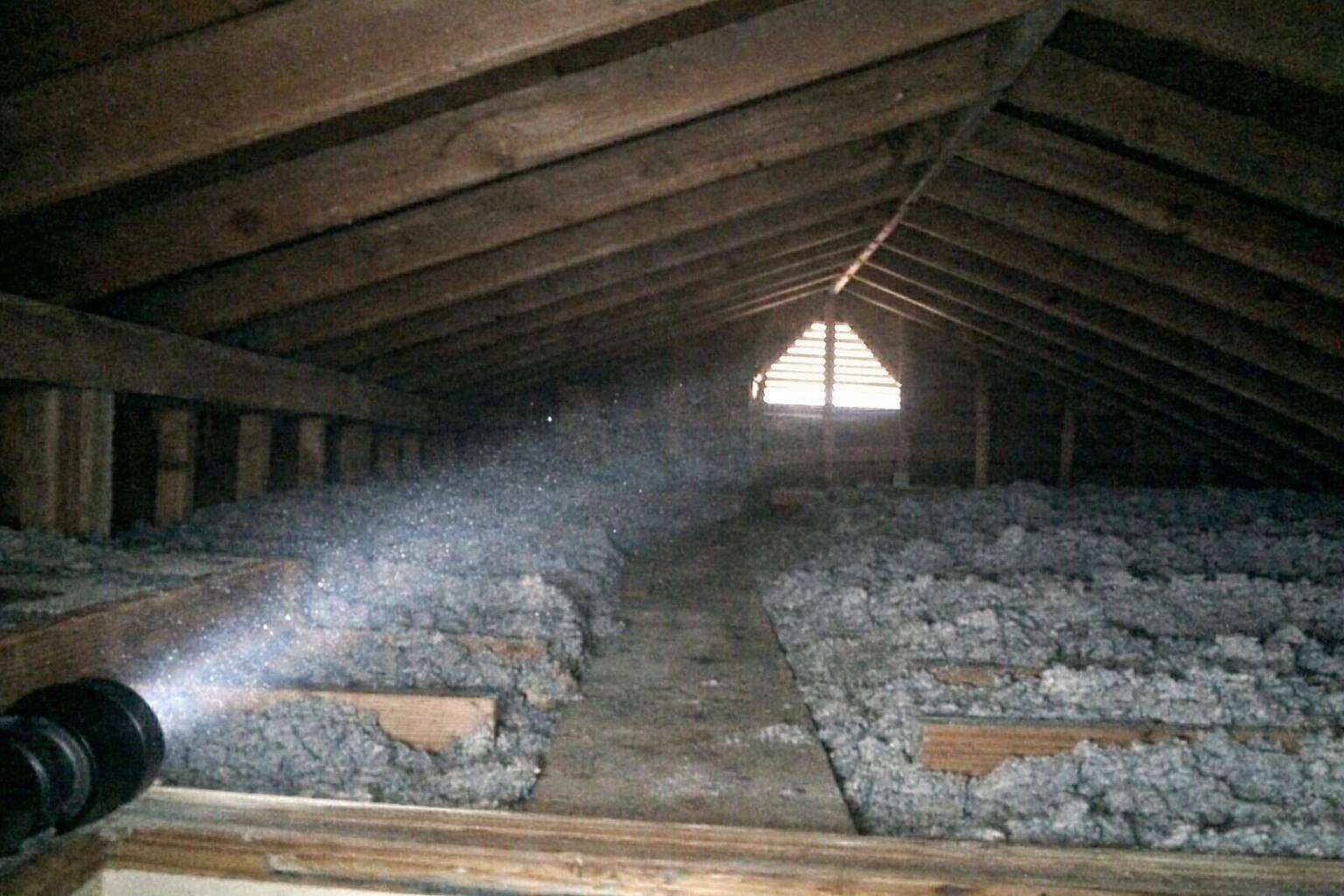
Inside the attic the inspection reads the evidence: droppings along the joists and top plates, runs worn through the insulation, nests in the corners, gnawed wiring and framing, and daylight showing at the eave line. UF/IFAS notes that rats chew wires and can potentially start a fire, so gnawed insulation on a cable is written up as its own finding. Insulation that has been tunneled and compressed is noted for the attic cleanup and insulation estimate.
Crawl space
On a raised foundation the crawl space is entered and the vents, the sill line and the hatch are checked for rust holes, torn screen, gaps at the mudsill and droppings on the sill plate. Many older San Diego houses in Mission Hills, North Park, Kensington and the surrounding pre-war neighborhoods sit this way, and a crawl space with duct runs is a corridor to every room.
Exterior harborage and trees
Outside, the walk covers palm skirts, ivy on walls and slopes, citrus and other fruit trees, woodpiles and stored material against the house, and any branch, fence top or utility line that bridges to the roof. UF/IFAS puts a roof rat's range at about 150 yards from the den, so on a canyon lot the walk also notes the slope and where the animals are coming up from.
What the written findings separate
The written findings separate four things a bundled quote runs together: the species and how active it is, where it is getting in, what has been damaged, and what each part of the fix will cost. Each has its own line so a homeowner can read the report against a second bid.
| Finding | What it records | What it leads to |
|---|---|---|
| Species and activity | Roof rat, house mouse or squirrel, from droppings, sounds and location; fresh or old sign; how many runs | The trapping plan and number of visits |
| Entry points | Every opening a quarter inch or larger, by location, with the closure it needs | The exclusion line on the quote |
| Harborage and bridges | Palm skirts, ivy, trees, woodpiles, lines to the roof | Homeowner tasks or a tree crew |
| Damage and contamination | Gnawed wiring, soiled and tunneled insulation, nests, odor | Attic cleanup, insulation, an electrician where wiring is chewed |
| Itemized quote | Trapping, sealing, attic work, each priced on its own | A number a second contractor can check |
The quarter inch on the entry list is the UF/IFAS rat-proofing standard, matched by the county's recommendation of quarter-inch 18 to 22 gauge hardware cloth. The findings are the homeowner's to keep, and the closure list that follows the sealing attaches to them.
Does the county do free rodent inspections in San Diego?
County Vector Control offers a free outdoor educational rodent inspection and a Rat Control Starter Kit, reachable at (858) 694-2888, and the inspection described here picks up where that visit stops: inside the attic, under the house and on the roof, with a contractor who can then trap and seal. The county visit is worth taking, and the two are not in competition.
The county's inspector walks the outside of the property, points at harborage and likely entry points, and hands over guidance and a kit. The county does no trapping, no baiting and no sealing, and its staff do not enter the attic or the crawl space. Its advice on materials, quarter-inch 18 to 22 gauge hardware cloth and metal weather stripping, is the same standard the contractors we route work to.
The inspection arranged through the contractors we route goes further in three ways. It enters the attic and the crawl space, it identifies the species and the activity level from the evidence inside, and it ends with an itemized quote from a company registered with the Structural Pest Control Board that can start the trapping the same week. A homeowner who has already had the county visit can hand over its notes; they shorten the outdoor walk.
What the inspection recommends: trapping, sealing and the poison question
The inspection recommends trapping sequenced with sealing for almost every San Diego house, because state law has taken most rodenticides off the residential table and because a poisoned roof rat dies wherever it happens to be, usually a wall. The options are compared below so the recommendation can be read against the alternatives.
| Option | Status at a San Diego home | What the inspection says about it |
|---|---|---|
| Snap trapping in the attic and at the eave | Legal; roof rats and house mice are non-native and unprotected, so no permit is needed | Recommended; every animal accounted for |
| Sealing with metal and quarter-inch mesh | Legal | Recommended alongside trapping; the part that lasts |
| Second-generation anticoagulant baits | Prohibited for residential use since January 1, 2021 under AB 1788 | A quote naming brodifacoum, bromadiolone, difenacoum or difethialone for a home is a red flag |
| Diphacinone baits | Prohibited for residential use since January 1, 2024 under AB 1322 | Same |
| Remaining legal baits (bromethalin, cholecalciferol, warfarin, chlorophacinone) | Licensed use only in tamper-resistant stations | Rarely recommended at a home; a carcass in the wall is the usual result |
| Foam or steel wool alone at openings | Legal | Chewed open; only acceptable behind metal |
The California Department of Pesticide Regulation's Q&A pages on AB 1788 and on diphacinone are the reference for the bait rows, and the California Department of Fish and Wildlife recommends exclusion and trapping over rodenticides and prohibits relocating trapped wildlife. The poison-free rodent control page goes into the law.
Rodent inspections for escrow and real estate
A rodent inspection is used in San Diego escrows the way a termite report already is: a buyer, a seller, an agent or a property manager orders a written attic and roofline report before close, before a tenant moves in, or before a claim. The findings are written to be handed to someone who was not there.
For a sale, the report records the species and activity, every entry point with its closure, any contamination or gnawed wiring in the attic, and the itemized cost to correct it, which gives both sides a number to negotiate on. Where the sealing and any trapping are then done, the closure list documents the correction. A property manager uses the same report at a turnover to show a unit was clear before a tenant arrived. The rodent clearance letters page covers the letter that follows a completed job.
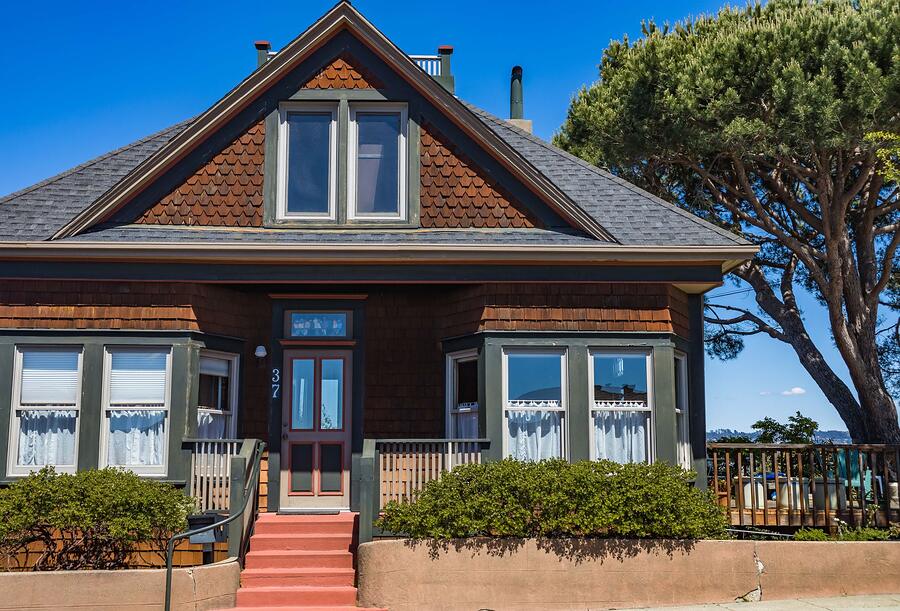
Two San Diego notes. A pre-war house on a raised foundation should have the crawl space in the report, since a roofline-only inspection misses half the shell. And a tile roof should have the eave checked course by course, because a missing bird stop along a rear elevation is the most common finding on the 1970s to 1990s stock in Scripps Ranch, Rancho Bernardo and Mira Mesa, and it is invisible from the ground.
What the inspection costs and what follows it
The inspection costs nothing, and the work it leads to is quoted in separate lines against national bands the homeowner can see. HomeGuide's 2026 national figure for a standalone rodent inspection is $0 to $175; there is no San Diego survey to cite, and the figure is a comparison for what other companies charge to bid.
| Line item | National band (HomeGuide 2026) | Set by |
|---|---|---|
| Inspection | $0 to $175; free here | Free with the call |
| Trapping and removal | $250 to $1,200 | Animals present, visits needed |
| Full-home exclusion | $500 to $2,500 | Eave length, tile, vents, penetrations, crawl space |
| Attic cleanup and decontamination | $600 to $2,500, up to about $4,000 severe | Square footage and contamination |
| Insulation removal and replacement | $2.50 to $5.50 per sq ft | Attic size and access; CSLB-licensed contractor |
| Dead rodent removal | $150 to $500 | Whether a wall is opened |
The crawl-space line in the national guides applies here more than in a slab-built market, since so many older San Diego houses have one. A quote after the inspection should let the homeowner strike any line and keep the rest.
What to check on the inspector and the company
Check that the company inspecting the house holds a Structural Pest Control Board Branch 2 registration and ask for its PR number to confirm at pestboard.ca.gov, because rodent control in California is Branch 2 work and every applicator, field representative and operator must work under a registered company. Every company we route holds that registration.
- Ask for the PR number and confirm it at pestboard.ca.gov before work starts
- Ask whether the attic and the crawl space will both be entered
- Ask for the findings in writing with the entry points listed by location
- Ask for the quote itemized: trapping, sealing, attic work
- Ask which products, if any, would be used, and check the answer against AB 1788 and AB 1322
- Ask how many follow-up visits are included and what a warranty on the sealing covers
- Where insulation replacement is proposed, ask for the CSLB license of the contractor doing it
The about page describes how a call is handled and the contact page has the hours and the downtown address.
Services that usually go with this one
A San Diego rodent job is a sequence, and these pages cover the steps on either side of this one.
- Rodent Clearance Letters: A written inspection report for escrow, leases, HOA files and insurance claims.
- Roof Rat Removal: Trapping the climbing rat that accounts for nearly every San Diego attic call, sequenced with sealing.
- Rodent Exclusion: Closing tile eaves, open Craftsman rooflines, crawl-space vents and utility gaps to the quarter-inch standard.
How the steps fit together is set out on the about page, and the phone line answers the rest at any hour.
A full rodent inspection
Every part of a house, walked in order.
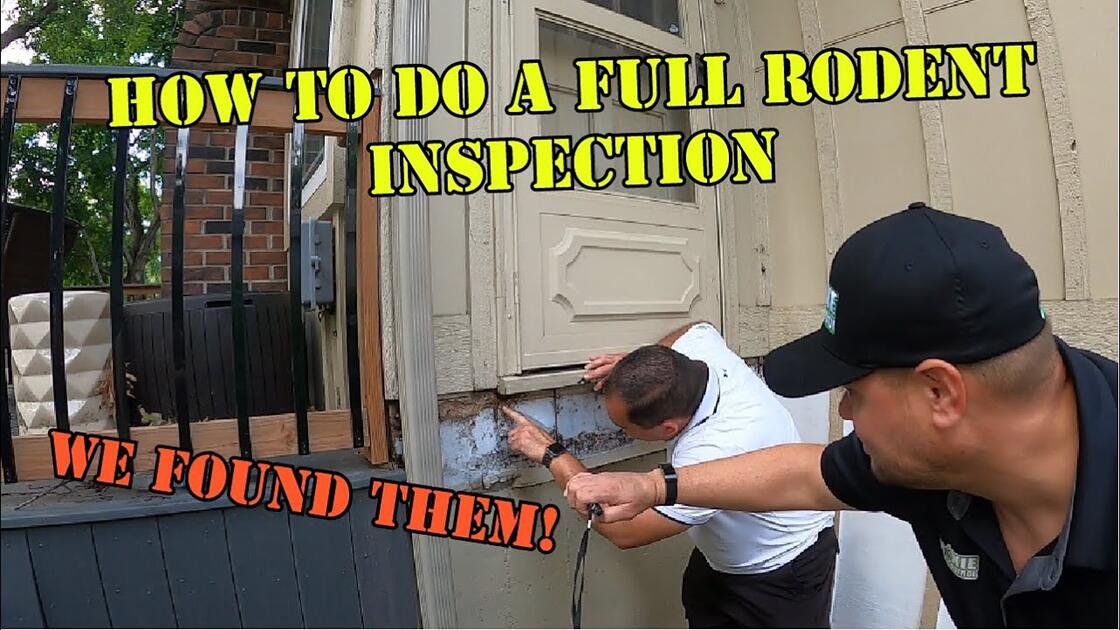
Video: How to do a mouse or rat inspection on a home, from Pest Control Guys.
How a San Diego rodent inspection runs
The inspection is the first step of the sequence, and sealing is what it is written to price.
-
Book the free visit
Call or send the form with what has been heard and where. Someone answers 24 hours a day, and the visit is booked with a contractor registered for Branch 2 work.
-
Walk the six zones
Roofline, eaves, attic, crawl space, exterior harborage and trees are walked in order, with photos where access allows and every opening measured against a quarter inch.
-
Write up the findings
Species and activity, entry points with their closures, harborage, and any damage or contamination go into a written report the homeowner keeps.
-
Itemize the quote
Trapping, sealing and any attic work are priced on separate lines against the national bands, so each one can be accepted, declined or compared.
-
Start the sequence
Where the homeowner goes ahead, traps go on the runs and the sealing is scheduled, and the closure list at the end attaches to the inspection report.
Why San Diego homeowners start with this inspection
The whole shell, above and below
The inspection we arrange enters the attic and, on a raised foundation, the crawl space, and walks the roofline from a ladder, which is the difference between a report on a San Diego house and a report written for a slab market. The pre-war neighborhoods sit on crawl spaces and the tile-roof neighborhoods carry the eave gap, and a roofline-only look misses one or the other. The county's free outdoor visit is a good start; this one goes inside.
County Vector Control's free inspection is outdoor and educational, with no trapping, baiting or sealing (858-694-2888)
Registered inspectors, checkable before the visit
Every company we route holds the Structural Pest Control Board Branch 2 registration that California requires for rodent work, and carries a PR number the homeowner can look up at pestboard.ca.gov before the ladder comes off the truck. Where the findings lead to insulation replacement, that work is routed to a contractor with the CSLB license for it. A homeowner who asks for both numbers gets both numbers.
Structural Pest Control Board Branch 2 registration, verifiable at pestboard.ca.gov
Findings written to be compared
The report separates species, entry points, harborage, damage and cost, and the quote itemizes trapping, sealing and attic work so a second bid can be read against it line by line. HomeGuide's 2026 national band of $0 to $175 for a standalone inspection is what other companies charge to produce a bid at all; here the bid is free and the homeowner keeps the report whether or not any work follows.
Standalone rodent inspection $0 to $175 national (HomeGuide 2026)
What Reddit Says About Rodent Inspections in San Diego
Homeowners on Reddit treat the inspection as the point where a rat problem either becomes a plan or becomes a sales pitch, and their first piece of advice is to get more than one. A single quote is treated as unreadable, and inspection fees of around seventy-five dollars just to receive a bid come up as a real barrier, which is why a free inspection that produces a written report is valued.
The vetting advice is consistent. Ask whether the inspector went into the attic or only looked from the hatch. Ask for the entry points in writing, by location, so a second company can check them. Ask whether the company does the sealing and the cleanup or only sets traps. Ask what is included and what is a separate line. And ask what happens if the animals come back, and whether any warranty on the sealing renews or ends.
The red flags people warn each other about are an inspection that ends in a bundled monthly plan, a recommendation for bait with no mention of sealing, a report with no entry points listed, and a contractor who cannot say which animal is in the house. Species confusion is its own theme; one thread has two companies disagreeing over whether the droppings were a young rat or a mouse, which is why the findings here name the species and the evidence for it.
The tone of the threads is people who have not slept, who feel the house is no longer theirs, and who have been told by someone that they are overreacting. The inspection is where they get a list instead of an opinion.
For a San Diego house the poison rows in those threads have a legal answer. The anticoagulant baits most of them argue about are prohibited at a home under AB 1788 and AB 1322, so an inspection that recommends them is recommending something the state has removed, and the trap-and-seal plan the threads favor is the one left standing.
A typical inspection call from a pre-war house in San Diego
The situation: A 1920s Craftsman in North Park on a raised foundation, open eaves, a lemon tree against the back fence and ivy on the slope behind it. The owners are in escrow as sellers, and the buyer's agent has asked for a rodent report after the home inspector noted droppings on the attic hatch. The sellers had never heard anything and are half convinced the buyer is inventing a problem.
What gets done: Whoever attends walks the eave from a ladder and finds two open bays between rafter tails at the rear corner with fresh gnawing, enters the attic and finds an old run through the insulation with droppings a quarter to half an inch long and pointed at the ends, then enters the crawl space and finds one foundation vent screen rusted through and droppings on the sill plate below it. The lemon tree and the ivy are written up as harborage. The report names the species as roof rat from the droppings and the location, lists the four openings with the closure each needs, notes the tunneled insulation for a cleanup estimate, and prices trapping, sealing and cleanup on three lines.
How it turns out: The sellers hand the report to both agents, agree to the trapping and sealing as a credit, and the closure list that follows the work goes into the escrow file with the report. The buyer moves in to a house with the eave bays screened, the vent replaced and a written record of both.
Inspection questions from San Diego homeowners
These are the questions that come up when someone is deciding whether to book an inspection and whom to trust with it.
Is the inspection really free, or is there a fee to get a quote?
The inspection is free and there is no fee to receive the quote. HomeGuide's 2026 national band for a standalone rodent inspection runs from nothing to $175, and some companies charge at the top of that band to produce a bid, which homeowner threads describe as a real barrier. Here the visit, the written findings and the itemized quote cost nothing, and the homeowner keeps the report whether or not any work is booked. The only thing asked for is access to the attic hatch and, on a raised foundation, the crawl space.
Will the inspector go into the attic and under the house?
Yes, where access exists. The attic is entered through the hatch and walked along the joists, and on a raised foundation the crawl space is entered through its access door. An attic with no hatch or a crawl space sealed shut is noted as a finding in itself, with the cost to create access. A look from the hatch with a flashlight misses the eave line, the runs through the insulation and the sill plate, and homeowner threads are full of reports produced that way. Ask the question before the visit; the answer here is yes.
I already had the county inspection. Do I need another one?
The county's free outdoor inspection, booked through Vector Control at (858) 694-2888, is a good first step and its notes are useful, so bring them. It stops at the outside of the house: the county does no trapping, baiting or sealing and does not enter the attic or crawl space. The inspection arranged here goes inside, identifies the species and activity from the evidence, lists every entry point with its closure, and ends in an itemized quote from a registered company that can start the work. If the county visit found nothing and the house is quiet, there may be nothing to add.
How do I check the company is licensed?
Ask for the company's PR number and look it up at pestboard.ca.gov, the Structural Pest Control Board site under the Department of Consumer Affairs. Rodent control is Branch 2 work, and every applicator, field representative and operator must work for a registered company that carries that number. Every company we route holds the Branch 2 registration. If insulation replacement is proposed as a contracted repair, ask separately for the CSLB license of the contractor who will do it, since that is contractor work under a B or C-2 license.
Can I use the report for a home sale or a rental?
The written findings are prepared to be handed to someone who was not at the visit, which is what an escrow, a tenant turnover or an insurance question needs. The report records the species and activity, every entry point with its closure, any damage or contamination in the attic, and the itemized cost to correct it. Where the work is then done, the closure list documents the correction, and a clearance letter can follow a completed job. Ask at booking that the report is for a transaction so the crawl space and the full eave are included.
The inspection costs nothing and the phone is answered day and night.

Book a free rodent inspection in San Diego
Call (619) 853-5729 or send the form. Someone answers the line 24 hours a day, and the inspection, the written findings and the quote are free.