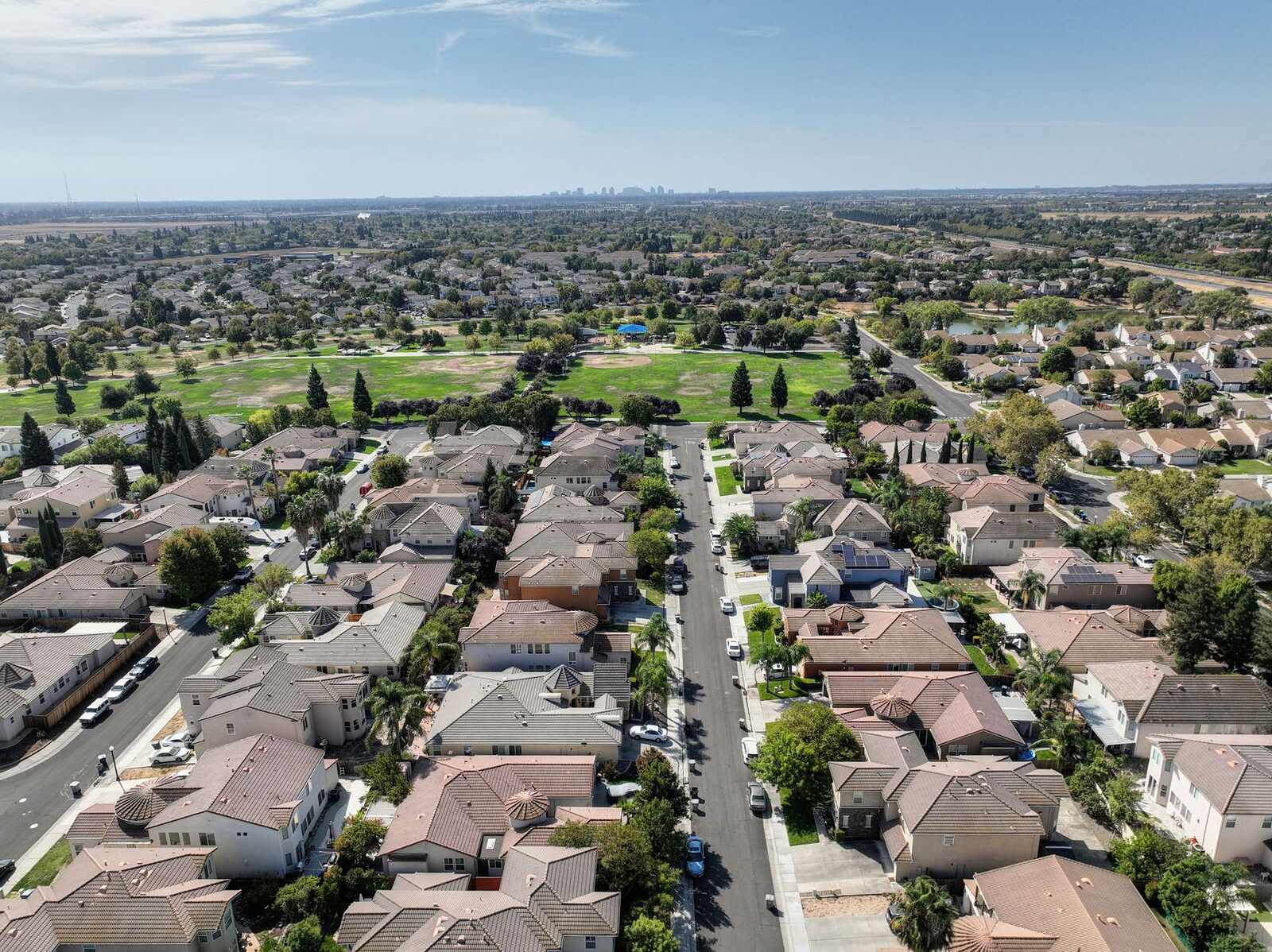
Rodent Removal in San Marcos, CA
San Marcos grew faster than any city in the county through the 1980s, and the tile-roof subdivisions from that boom back onto the same brush hills the 2014 Cocos Fire burned. One call gets a free eave and attic inspection from a registered contractor.
- Free eave and attic inspection
- Phone answered 24 hours a day
- SPCB Branch 2 registered contractors
Free Inspection in San Marcos
The free inspection in San Marcos is mostly a tile-roof inspection. Whoever attends walks the eave course from a ladder looking for missing, crushed or corroded bird stops, checks the ridge and gable vents, then reads the attic for droppings, rub marks and flattened insulation runs. On a subdivision lot that backs onto open hillside, the fence line and the slope behind it get a look as well, because the brush is where the colony lives when the house is closed. What comes back in writing shows trapping, sealing and cleanup as three lines, each with its own number.
San Marcos sits in the North County inland valley between Vista and Escondido, a little over half an hour from downtown San Diego up Interstate 15 and State Route 78 when traffic allows, and the contractors we route there work that corridor daily. The phone is answered 24 hours a day. Book a free inspection and say what you hear, over which room, and for how long.
A city built in two decades, almost all of it under tile
San Marcos incorporated in January 1963 with a few thousand people, was the third fastest-growing city in California during the 1970s, and nearly doubled again through the 1980s from about 17,500 residents in 1980 to close to 34,000 by 1990, then kept climbing toward 100,000 by 2020. Nearly every house from that run is the same build: stucco over wood frame, a trussed roof under concrete S-tile, aluminum or stucco soffits, and a first course of tile open along the eave unless a bird stop was fitted and has survived.
The bird stop is the closure that decides most San Marcos jobs. It is a code-approved metal profile that sits under the first course, and the Department of Energy lists installing bird stopping among its recommended measures for tile roofs. On a thirty-year-old roof it is often missing along part of the run or crushed flat by a reroof, leaving a gap the height of a tile that runs the length of the eave. Rodent exclusion on a San Marcos house is a manufactured metal closure along that course, hardware cloth at the gable and ridge vents, and a collar where the air conditioning lines pass through the stucco. When a quote comes in cheap, that gap has usually been priced for a bead of expanding foam.

The brush hills behind the fence are permanent habitat
San Marcos subdivisions were graded into hills that stay open above the last row of houses, and the Cocos Fire of May 2014 showed how close that brush sits: the fire started in the hills south of the state university campus, destroyed more than forty structures including a dozen homes, and was contained after eight days. Houses that burned were rebuilt; houses on the same streets that survived kept the eave details they had, and the chaparral that burned has regrown up to the fence lines since.
For a rodent job the hillside matters twice. It is where the roof rats live, since a wet drainage between two graded slopes is habitat all year, and it is what they cross to reach a roof: the University of Florida extension puts the species' range at around 150 yards from its den, which covers a back fence, a slope and the first row of houses. Trapping in the attic removes what is inside; the sealed eave is what stops the hillside sending replacements. Roof rat removal on a hillside-backed San Marcos lot runs both together.
What We Handle in San Marcos
The services San Marcos calls for most are roof rat trapping in tile-roof attics, eave closures, and the attic cleanup that a long infestation under a hillside leaves behind.
- Roof rat removal: snap traps on the attic runs of a 1980s or 1990s tract house, left at least a week because roof rats avoid new objects.
- Rodent exclusion: a manufactured metal bird stop along every open tile course, hardware cloth at the gable and ridge vents, and the air conditioning line collar.
- Rodent inspection: free, covering the eave, the attic and the slope behind the fence, with a written plan priced line by line.
- Attic cleanup: droppings and soiled insulation removed from an attic that has carried rats through several winters.
- Attic insulation replacement: fresh material where the old fill was flattened into runs, by a contractor with the CSLB license for it.
- Rodent clearance letters: a written report for an escrow in a subdivision where buyers ask about the hillside.
- Commercial rodent control: the business parks and restaurant rows along the State Route 78 corridor, where shared roof decks move rats between tenants.
A Typical San Marcos Job
The situation: A family in a two-story 1990s tile-roof house on a San Marcos cul-de-sac that backs onto open hillside hears running over the upstairs hallway every night after the first rain in November. A previous company set bait stations in the attic and told them to wait; the noise stopped for two weeks, a smell arrived, and then the noise came back. Nobody upstairs is sleeping well.
What gets done: Whoever attends finds the bird stop missing along the entire rear eave facing the hill, chewed mesh at two off-ridge vents, and droppings along the top plate over the hallway. Snap traps go on the run that afternoon and stay a week. The vents get quarter-inch galvanized hardware cloth and metal end caps, the dead animal from the earlier bait is located and removed as its own line, and a manufactured metal closure goes along the rear eave once the traps have been quiet.
How it turns out: Two adults trapped in the first four nights and nothing after. The smell goes with the carcass, the return visit finds no fresh droppings, and the family receives a closure list naming the eave, the two vents and the removed animal with the material used at each.
What This Costs in San Marcos
A San Marcos rodent job runs inside the published national bands, and the length of open tile eave is what moves the sealing line within its band.
| Work | National band (HomeGuide 2026) |
|---|---|
| Inspection | Free with us; standalone elsewhere $0 to $175 |
| Trapping and removal | $250 to $1,200 |
| Full-home exclusion | $500 to $2,500 |
| Attic cleanup and decontamination | $600 to $2,500, to about $4,000 when severe |
| Insulation removal and replacement | $2.50 to $5.50 per square foot |
| Dead rodent removal | $150 to $500 |
A single-story house with a bird stop missing along one eave sits in the lower half of the exclusion band. A two-story house with tile on every eave, ridge vents front and back and a garage that was never sealed climbs toward the top, because the closure runs a long way. The bands are national figures, labeled as such because no San Diego survey exists, and each is confirmed at the free inspection. Ask for trapping, sealing and cleanup as separate lines, and ask what the sealing warranty covers and whether it renews.
Keeping rodents out once they are gone
Three approaches, and why sealing is the one that lasts.
Video: 3 Ways To Get Rid Of Mice or Rats, And Keep Them Out!, from Everything Homestead.
Common Questions in San Marcos
What callers from San Marcos ask before they book.
How long does it take to get rid of rats in a San Marcos attic?
Usually two to three weeks from the first visit to the closed eave. HomeGuide's national guide gives two to three days for trapping a small number of animals and one to two months for a severe infestation, and UF/IFAS advises leaving traps in place at least a week because roof rats are wary of new objects. A tile roof with a long open course takes a full day to close, and that closure is what stops the hillside sending the next family in.
What keeps rats away permanently?
A closed eave. Bait, repellents and ultrasonic plugs do nothing about the opening, and the brush behind a San Marcos fence line is habitat all year. A manufactured metal bird stop along the tile course, hardware cloth at the vents and a collar at the line-set sleeve are what hold, and a roofline walk after any windstorm catches a closure that has shifted. Pruning anything that touches the roof keeps the road closed as well.
Can a company still put bait in my attic?
Only a narrow list, and the contractors we route work without it. AB 1788 prohibited the second-generation anticoagulant baits at homes across California from January 1, 2021, and AB 1322 added diphacinone from the start of 2024, with exemptions reserved for sites such as food warehouses and medical waste generators. An animal that eats what remains legal dies in the attic or a wall, which is how a bait-only plan in a San Marcos subdivision ends with a smell over the hallway and a second bill.
Who is licensed to do this work in San Marcos?
Rodent control for hire in California is Branch 2 work under the Structural Pest Control Board, and every contractor we route into San Marcos works for a company holding a PR registration. Ask for the number and confirm it at pestboard.ca.gov before work starts, and ask for proof of insurance at the same time. Insulation replacement is routed to a contractor with the Contractors State License Board license for it, which cslb.ca.gov confirms the same way.
The hill stays where it is. The eave can be closed, starting with a free inspection.
Nearby Areas We Serve
The same contractors cover the cities around San Marcos, and the service area is the whole of San Diego County.

Book a Free Inspection in San Marcos
A free inspection on a San Marcos house finds the open tile course, the chewed vents and the runs in the attic, and prices the trapping, the closure and any cleanup as separate lines before anyone starts. The phone is answered 24 hours a day.