
Rodent Removal in Del Mar, CA
Del Mar is a village of fewer than five thousand people on a bluff between a lagoon and the ocean, with Torrey pines and hedges over every roof. A free inspection by a registered contractor finds the way in and prices each closure.
- Free roofline, attic and landscape inspection
- Trapping plus corrosion-resistant sealing
- Branch 2 registered contractors routed
Free Inspection in Del Mar
A free Del Mar inspection walks the landscape and the roofline together, because on a hillside lot here the canopy from the house above often hangs over the roof below. Whoever attends checks the pines, hedges and vines for routes, the eave line, gable vents and any tile course for openings, the crawl space under the older cottages, and the attic for droppings and worn runs. Every existing screen is checked for salt corrosion. The report puts trapping, sealing and any cleanup on separate lines with a price on each.
Del Mar is about twenty miles north of downtown San Diego on Interstate 5, and the coastal North County contractors we route are close by. The phone is answered 24 hours a day. Book a free inspection and describe the house, the trees and what you have heard.
Village cottages from the 1920s and the hedges around them
Del Mar took its name from a tent city on the beach in the 1880s, and the village that grew up on the bluff above filled with cottages in the 1920s, when electricity arrived and the town rebuilt its pier and roads, according to the Del Mar Historical Society. The houses along the streets west of Camino del Mar range from those early cottages through Craftsman and Spanish revival to the contemporary rebuilds of the last few decades, on small lots with hedges grown thick over a century and palms and pines above them. The older ones sit on raised foundations with a crawl space and foundation vents that the sea air has been rusting since they went in.
A hedge into an eave is a covered ladder, and the County of San Diego names dense vines, palm skirts and fruit trees as the places a roof rat nests before it moves to a roof. The University of Florida extension gives the animal a range of around 150 yards, which on a Del Mar block covers every house on the street. Rodent exclusion on a village cottage is quarter-inch hardware cloth at the foundation and gable vents, metal at open rafter bays, a bird stop along any tile eave, and a fitted crawl-space hatch, all in galvanized or aluminum stock with stainless fasteners because the ocean is a block away.

Torrey pines on the hillsides and the lagoon to the north
The bluffs and hillsides of Del Mar carry the Torrey pine, the rare native that gives the state reserve to the south its name, and the houses stepped down those slopes sit under its canopy and the eucalyptus and cypress planted beside it. On a hillside lot the roof of one house lies below the garden of the next, so a neighbor's canopy or hedge can overhang a roof its owner never sees. Roof rats are arboreal, per UF/IFAS, traveling along branches and wires to the roofline, and the pine litter that piles against a fascia is shelter at the edge of the eave.
North of the village the San Dieguito Lagoon meets the ocean beside the fairgrounds, and the houses along its edge look across marsh and reed that never dry out, which is permanent habitat within the animal's range. The hillside stock runs from 1950s and 1960s ranch houses to the tile-roofed rebuilds of the 1980s onward, where the eave course is the entry: the gap under the first row of tile has a named closure, the bird stop, which the US Department of Energy lists among its recommended measures for tile roofs. Roof rat removal on a Del Mar hillside house runs snap traps in the attic while the eave is closed in metal and the canopy is lifted off the roof, and the report says which limbs belong to the neighbor.
What We Handle in Del Mar
Del Mar calls are roof rats in cottage and hillside-house attics, canopy and hedge routes, corrosion-proof sealing by the water, and the paperwork a coastal sale asks for.
- Roof rat removal: snap trapping on the attic runs, with traps left a week or more since UF/IFAS notes the species is wary of new objects.
- Rodent exclusion: galvanized or aluminum hardware cloth at vents and rafter bays, bird stops along tile eaves and fitted hatches, fastened in stainless for the salt air.
- Rodent inspection: free, covering the roofline, attic, crawl space where there is one, and the pines, hedges and lagoon edge around the lot.
- Attic cleanup: nests, droppings and fouled insulation taken out and the space sanitized once the rats are gone.
- Attic insulation replacement: new material where the old is flattened or wet, routed to a contractor holding the CSLB license for the repair.
- Rodent clearance letters: a written inspection report for an escrow, which Del Mar sales ask for once a buyer's inspector has opened the attic.
- Dead rodent removal: locating a carcass in a wall or ceiling after a bait-only treatment by someone else.
A Typical Del Mar Job
The situation: The owners of a 1930s cottage two streets up from the beach are preparing to list the house in spring. The buyer of the house next door had an inspector find droppings in that attic, and the neighbors have warned them. A Torrey pine from the lot above hangs over their roof and a pittosporum hedge has grown into the eave along the side yard. They have heard nothing and feel slightly accused, but they want the attic checked before their own listing.
What gets done: The inspection finds old and fresh roof rat droppings along the top plate under the pine side of the roof, two rafter bays open where the hedge meets the eave, and a foundation vent with its screen rusted through. Snap traps go into the attic for a week. The rafter bays are closed with galvanized hardware cloth on stainless screws, the foundation vent gets aluminum screen, and the owners have the hedge cut back and ask the uphill neighbor to lift the pine off the roof.
How it turns out: One rat is trapped on the second night and nothing afterward. The follow-up finds the seals intact and no new droppings, and the contractor writes a clearance letter listing what was found, what was sealed and the follow-up result. It goes into the listing file before the first showing.
What This Costs in Del Mar
A Del Mar rodent job typically falls inside the national bands below, and the free inspection says which lines a particular house needs.
| Work | National band (HomeGuide 2026) |
|---|---|
| Inspection | Free here; $0 to $175 standalone elsewhere |
| Trapping and removal | $250 to $1,200 |
| Full-home exclusion | $500 to $2,500 |
| Attic cleanup and decontamination | $600 to $2,500, about $4,000 for a severe attic |
| Insulation removal and replacement | $2.50 to $5.50 per square foot |
| Dead rodent removal | $150 to $500 |
| Full-scope restoration | $3,000 to $10,000 and up |
The bands are HomeGuide's 2026 national figures, labeled national because no Del Mar cost page exists to cite, and the inspection turns them into one number for one house. Two things move a Del Mar job inside the band: the corrosion-resistant metal the coast requires, which costs more than plain steel mesh, and the access on a hillside lot, where a roof edge above a slope takes longer to reach than one over a flat yard. A village cottage on a raised foundation carries the crawl-space line the national guides price; a hillside rebuild on a slab pays instead for the length of tile eave that needs a bird stop. Ask whoever attends for separate lines and for the terms of the sealing warranty.
What is moving inside the walls
How noise in a wall cavity gets traced.
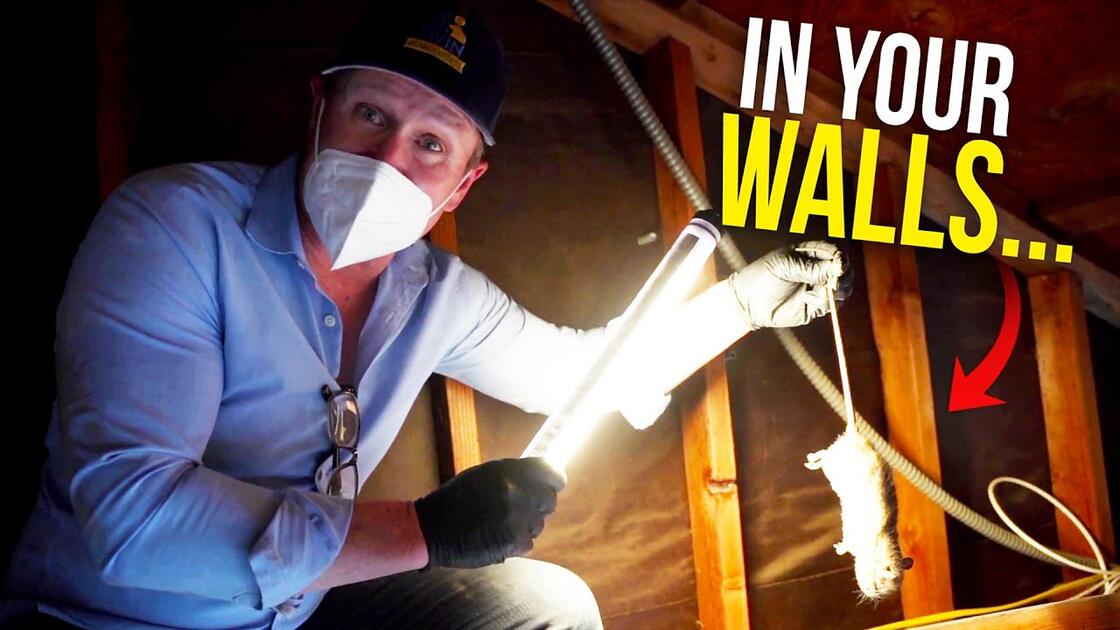
Video: Rodents in your walls? Here's what you do, from Twin Home Experts.
Common Questions in Del Mar
What callers from Del Mar ask before they book.
The tree over my roof belongs to the neighbor. What then?
The house gets sealed regardless, and the report notes which limbs overhang from which lot so the conversation next door has something written to go on. A sealed eave, screened vents and a fitted hatch hold whether or not a rat can reach the roof; the canopy is a route, and the metal is the door at the end of it. Most Del Mar neighbors, once shown the report, lift the canopy, since the same rats visit both houses. The inspection lists your own hedges and pines as well, so the trimming is complete on your side.
Does salt air affect the sealing?
It sets the material. Thin steel mesh and plain fasteners rust through within a few years a block from the ocean, and a rusted screen is an opening again. The closures on a Del Mar house are galvanized or aluminum, fastened in stainless or coated screws, and a bird stop under a tile eave is galvanized steel or aluminum as standard. The inspection checks every existing screen for corrosion, which on a 1920s cottage often turns up the opening on its own. Ask whoever attends to show you the metal before it goes on.
Can I get a letter for the buyer?
Yes. Once trapping, sealing and the follow-up are done, the contractor can write a rodent clearance letter recording what was found, which openings were sealed and with what, and what the follow-up showed, which is what a buyer's agent asks for in a Del Mar escrow. Every company we route holds the Structural Pest Control Board Branch 2 registration that rodent work in California requires, and the PR number on the letter can be checked at pestboard.ca.gov. If you are the buyer, book the free inspection before your contingency ends and use the itemized findings in the negotiation.
Is bait used, and how long does the job take?
Bait is mostly off the table at a California home: AB 1788 removed the second-generation anticoagulants from residential use in 2021 and AB 1322 added diphacinone in 2024, per the California Department of Pesticide Regulation, and a poisoned rat dies in the wall anyway. The contractors we route trap and seal. Two to three weeks is typical, with HomeGuide's 2026 guide giving two to three days of trapping for a few animals and a month or two for a severe infestation, and UF/IFAS advising a week of traps before judging.
Book the free Del Mar inspection before the buyer's inspector opens the attic.
Nearby Areas We Serve
The same contractors cover the cities around Del Mar, and the service area is the whole of San Diego County.

Book a Free Inspection in Del Mar
A free inspection on a Del Mar cottage or hillside house shows where the rats come in, which limbs are the route, and what each closure costs in metal that lasts by the sea. The phone is answered 24 hours a day.