Dead Rodent Removal in San Diego, CA
A dead rat in a wall or ceiling announces itself as a smell that gets worse for days. The contractor we route finds the carcass, removes it, sanitizes the spot and closes any opening made to reach it. Licensed contractors handle every job we route.
- Carcass located before any wall is opened
- Opening sanitized and closed
- Free inspection first
What dead rodent removal in San Diego includes
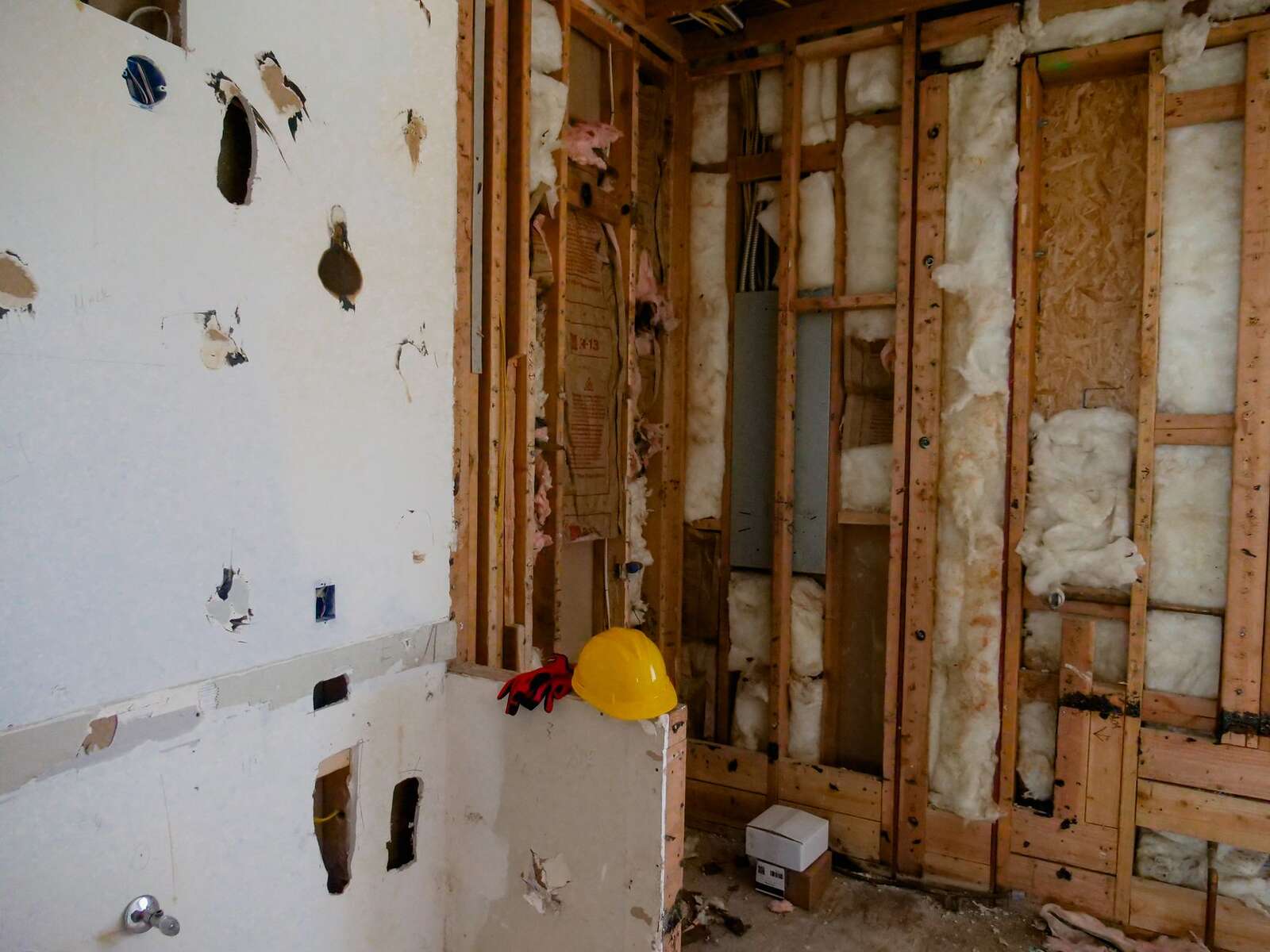
Dead rodent removal is the locating and removal of a carcass from inside the structure, the sanitizing of the spot it lay on, and the closing of any wall, ceiling or soffit opened to reach it, quoted as its own line. On a San Diego house the carcass is most often in an attic, a wall cavity below the attic, a crawl space under a raised floor, or a soffit box.
Whoever attends works from the smell inward. The strongest point is found by nose and by a thermal or borescope check where the wall allows it, the carcass is removed and bagged, the surface is treated with an enzyme cleaner and a sanitizer, and the opening is patched. If the animal died in an attic or crawl space the job needs no cut at all. The trapping side of a rat problem is on the roof rat removal page and the sealing on the rodent exclusion page.
- Locating the carcass by odor, staining, fly activity and inspection of the attic, crawl space and wall cavities
- Removal and sealed bagging of the carcass and any nest material with it
- Enzyme treatment and sanitizing of the surface it lay on
- Odor neutralizer where fluids have soaked into wood or drywall
- A minimal cut in drywall or a soffit panel when the carcass is inside a cavity, and a patch afterward
- A check of how the animal got in, reported to the homeowner for sealing
Living with the smell is its own kind of strain. People describe sleeping with windows open in January and feeling that the house has stopped being theirs. Finding the animal is what ends that.
Signs there is a dead rat in the wall
A dead rat in a wall announces itself as a smell that is faint on the first day, builds over the following days, and is strongest in one room and at one spot on one wall. The smell is sweet and sour at once, closer to spoiled meat than to the ammonia of a live infestation, and it is worse when the wall is warm from afternoon sun or from a heating duct behind it.
- A localized smell that gets stronger for several days after it is first noticed
- Blowflies or flesh flies appearing indoors in a room with the windows closed, then clustering at a window
- A stain or damp patch appearing on drywall or a ceiling below an attic
- The smell strongest at a single outlet, switch plate or baseboard, where the cavity vents into the room
- Scratching or gnawing that stopped a few days before the smell began
- A recent bait job, by a previous company or by the homeowner, in the two weeks before
The last sign is the most useful. A rat that fed on an anticoagulant bait dies days later, somewhere warm and hidden, and the timing of the smell against the timing of the bait is usually the first thing whoever attends asks about.
Why this call follows a bait job
Most dead-rodent calls follow poison, because an anticoagulant bait kills slowly and gives the animal time to go back to its nest inside the house. The US Environmental Protection Agency describes most rodenticides as anticoagulants, with death arriving 4 days to 2 weeks after the animal starts feeding. A roof rat that eats from a bait station on the fence line on Monday can be dead in the bedroom wall by the weekend after next.
The University of Florida extension service (UF/IFAS) puts the alternative plainly: trapping reduces the risk of a poisoned rat dying inside a building. A snap trap leaves the animal where it can be picked up. A bait leaves the animal where it chooses to die, and roof rats choose the attic, a wall cavity or the crawl space, which is why the contractors we route trap on a residential job and leave the bait out of it.
The old line that poison makes rats thirsty so they go outside to find water is a myth, and homeowners in forum threads treat a company that repeats it as one to walk away from. Rats do not leave a warm nest to die politely in the yard.
Why trapping is the norm in San Diego
Trapping is the norm in San Diego because California has removed the anticoagulant baits that used to be the default from residential use. AB 1788, the California Ecosystems Protection Act, took effect on January 1, 2021 and prohibits the second-generation anticoagulants brodifacoum, bromadiolone, difenacoum and difethialone statewide, with exceptions limited to sites like medical waste generators, food and drug manufacturing, agricultural operations and declared public health emergencies. AB 1322 took effect on January 1, 2024 and added the first-generation anticoagulant diphacinone to the same moratorium. The California Department of Pesticide Regulation publishes question-and-answer pages on both.
What a licensed company can still use at a home is narrow: non-anticoagulant baits such as bromethalin and cholecalciferol, and the two remaining first-generation anticoagulants, warfarin and chlorophacinone. All of them still kill the animal somewhere the homeowner cannot see. The California Department of Fish and Wildlife urges exclusion and trapping over rodenticides for the same reason, and because roof rats and house mice are non-native and unprotected, no permit is needed to trap them.
The practical result is that a San Diego rat job done to the current law is trapping plus sealing, and the dead-in-the-wall call is most often the aftermath of an old bait station, a do-it-yourself product from a hardware shelf, or a company that did not update its methods when the law changed. The poison-free rodent control page covers the method that avoids the call altogether.
How long does a dead rat smell last?
The smell lasts until the carcass is removed or has dried out completely, and the second takes far longer than most people can stand. A small animal in a dry, ventilated attic goes through the worst of it faster than a large one in a closed wall cavity, and a warm wall or a heating duct behind it prolongs the strongest phase. A rat is at the large end for a house rodent.
Two things shape the timeline more than any figure. The first is where the animal is: a carcass in the open in an attic or crawl space can be lifted out the same day it is found, and the smell drops away as soon as the spot is treated. The second is whether it can be reached: a carcass deep in a closed wall behind a tiled shower, where no reasonable cut is possible, is the case where the homeowner is left with odor neutralizers and time.
Masking sprays and plug-in fresheners cover the smell for an hour. Removal and an enzyme treatment on the surface it lay on are what end it. The free rodent inspection will say which of the two cases the house is.
How do you find a dead rat in a wall?
A dead rat in a wall is found by narrowing the smell to one cavity, checking the attic and crawl space above and below it first, and cutting drywall only when the carcass is confirmed inside the wall itself. Most carcasses in San Diego houses are reachable without a cut, because roof rats nest in the attic and die there, or die in the crawl space of a raised house.
| Method | What it finds | Where it falls short |
|---|---|---|
| Nose and hand at outlets and baseboards | The one cavity out of several where the smell vents into the room | Cannot tell attic from wall on a two-story house |
| Attic and crawl-space search | The carcass in the open, which is the common case with roof rats | Nothing, if the animal dropped into a wall from the top plate |
| Fly activity and staining | The exact bay, from where flies emerge and where fluids have marked the drywall | Appears late |
| Borescope through a small hole | Confirms the carcass before a cut is made | Blocked by insulation and fire blocking |
| Thermal camera | A warm spot from decomposition in the first days | Fades once the carcass cools |
The cut, when one is needed, is a rectangle between studs, sized to a patch and placed low on the wall where the carcass has settled. Whoever attends removes the animal and any nest with it, treats the framing and the back of the drywall, and patches the opening. The homeowner is told before the saw comes out and shown what was found.
Closing the opening afterward
Every cut made to reach a carcass is closed before the job is done, and so is the opening the rat used to get into the house, because a dead rodent call that ends with a patched wall and an open eave is a call that repeats. The patch is the small part. The sealing is the part that matters.
On a San Diego house the way in is at the roofline or the foundation. A tile roof gets a manufactured metal bird stop under the first course where one is missing or crushed. Open eaves on a Craftsman or a ranch house get quarter-inch hardware cloth at the returns and vents. A raised foundation gets its vents screened with the quarter-inch, 18 to 22 gauge hardware cloth the county recommends. Expanding foam on its own is chewed through and is used only as a backing behind metal.
Where a soffit panel or a section of drywall was opened, the patch goes in the same visit, taped and ready for the homeowner's painter, and the location is written on the record. The attic cleanup page covers what happens when the carcass was one of many signs of a longer infestation overhead.
What dead rodent removal costs in San Diego
Dead rodent removal runs $150 to $500 as a national typical-job band in HomeGuide's 2026 figures, and the free inspection produces the number for a specific house. There is no San Diego cost page to draw on, so the table carries national figures only, with the source named.
| Line item | National band (HomeGuide 2026) |
|---|---|
| Dead rodent removal | $150 to $500 |
| Trapping and removal of the live animals | $250 to $1,200 |
| Full-home exclusion sealing | $500 to $2,500 |
| Attic cleanup and decontamination if needed | $600 to $2,500; severe to about $4,000 |
| Standalone inspection | $0 to $175; free here |
What moves the figure inside the band is access. A carcass lifted from an open attic or crawl space is the bottom of the range. One that needs a borescope, a drywall cut behind a kitchen cabinet and a patch is the top. A drywall patch that needs texture and paint to match is usually a painter's line. If the animal was one of several and there are droppings and nests overhead, the cleanup is quoted apart. Ask whether the sanitizing and the patch are in the removal price, and whether the sealing of the entry point is a separate line.
Dead rodent calls on San Diego housing
Where a roof rat dies in a San Diego house depends on how the house was built, and the era of the house tells whoever attends where to look first.
Pre-war houses with crawl spaces
Under the clay tile and open eaves of Mission Hills, Kensington, Talmadge, North Park, South Park and Golden Hill, a rat has two nesting spaces, the attic and the crawl space under the raised floor. A smell in a ground-floor room on one of these houses is checked from below before any wall is touched, through the crawl-space access, and the carcass is usually lying on the soil or in a floor batt.
Ranch houses of the 1940s to 1960s
The low attics of Clairemont, Serra Mesa, Allied Gardens and Bay Park sit directly over the ceilings, and a rat that dies on the top plate at the eave puts the smell into the room below. The animal is reached from the hatch, on hands and knees along the eave, with no cut needed. The Clairemont page covers that stock and its canyon lots.
Stucco and tile from the 1970s onward
In Tierrasanta, Mira Mesa, Rancho Penasquitos, Scripps Ranch and Rancho Bernardo, the two-story stucco houses have wall cavities that run from the attic to the floor, and a rat that comes in through a crushed bird stop at the eave can drop into a wall and die there. These are the cases that need the borescope and the cut.
Season and licensing
Dead-rodent calls follow the indoor peak, so they cluster from November through March, a couple of weeks after a homeowner or a previous company put out bait. Removing a carcass from a structure is part of the Branch 2 rodent work regulated by the Structural Pest Control Board, and every company we route holds the Branch 2 registration the work requires. Get the PR number from whoever attends and look it up at pestboard.ca.gov before the job begins.
What to ask before booking dead rodent removal
A dead rodent quote should say how the carcass will be located before any cut is made, whether sanitizing and the patch are included, and how the entry point will be sealed, and a company that cannot answer those three is guessing at a wall. Ask before the visit.
- Which PR number does the company hold with the Structural Pest Control Board, and is it current at pestboard.ca.gov?
- How is the carcass located before a wall is opened, and will the homeowner be shown before a cut?
- Are the enzyme treatment, sanitizing and the drywall patch in the price, or separate lines?
- Does the visit include finding and sealing the entry point, or is exclusion quoted apart?
- Does the company use anticoagulant baits at homes, and if so, which ones and under what law?
- If there is a live infestation as well, how is trapping scheduled, how many follow-up visits are included, and what does the exclusion warranty cover?
The answer to the bait question is the one that tells you whether the company is working to the current California law. What the routed contractors are expected to put in writing is on the about page; the phone number and the form are on the contact page.
Services that usually go with this one
A San Diego rodent job is a sequence, and these pages cover the steps on either side of this one.
- Roof Rat Removal: Trapping the climbing rat that accounts for nearly every San Diego attic call, sequenced with sealing.
- Attic Cleanup and Decontamination: Droppings, nests and soiled insulation out, the attic sanitized, without the scare stories.
- Rodent Exclusion: Closing tile eaves, open Craftsman rooflines, crawl-space vents and utility gaps to the quarter-inch standard.
How the steps fit together is set out on the about page, and the phone line answers the rest at any hour.
Where the smell comes from
Why the odor lingers, and what ends it.
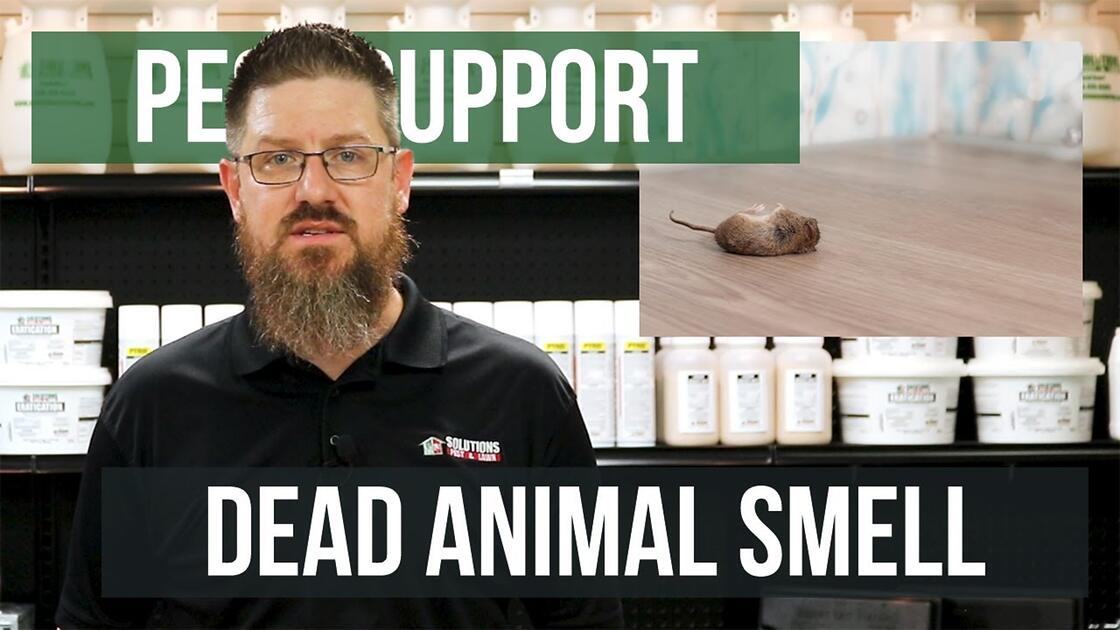
Video: How do I get rid of dead animal smells?, from Solutions Pest & Lawn.
How a dead rodent removal runs in San Diego
The carcass is found and removed, and the way it got in is closed so the call does not repeat.
-
Locate by smell and search
Whoever attends narrows the odor to one room and one cavity, then checks the attic and crawl space above and below it, where most roof rat carcasses are lying in the open.
-
Confirm before cutting
If the carcass is inside a wall, a borescope through a small hole confirms the bay, and the homeowner is shown before a patch-sized rectangle is cut low between the studs.
-
Remove and sanitize
The carcass and any nest material are bagged and removed, the surface is treated with an enzyme cleaner and a sanitizer, and an odor neutralizer goes on soaked wood or drywall.
-
Patch and seal
The cut is patched the same visit, and the entry point found on the roofline or at a foundation vent is closed with hardware cloth, sheet metal or a metal bird stop.
-
Written record
You receive a note of where the animal was, what was treated, where any patch is, and what was sealed, so a painter and any later inspection have the details.
Why San Diego homeowners route dead rodent calls through us
The carcass confirmed before a wall is opened
The contractor we route searches the attic and crawl space first and uses a borescope to confirm a carcass inside a wall before any drywall is cut, so the homeowner ends up with one small patch in the right place. On San Diego housing the animal is most often in the attic of a ranch house or the crawl space of a pre-war house, reachable without a cut. The written record names the spot, and the homeowner is shown what was found before the saw and after.
County of San Diego Vector Control: the roof rat, the county's most common rat, climbs and nests high
Trapping, so the animal dies where it can be collected
The reason this call exists is slow poison. The EPA notes that most rodenticides are anticoagulants and that death follows 4 days to 2 weeks after feeding starts, which is time enough for a roof rat to go home to a wall. The contractors we route trap on residential jobs, in line with California's AB 1788 and AB 1322, which removed the second-generation anticoagulants and diphacinone from home use. A trapped rat is collected on the next check. A poisoned rat is found by smell.
UF/IFAS: trapping reduces the risk of a poisoned rat dying inside a building
Removal, sanitizing and sealing as separate lines
HomeGuide's 2026 national figures place dead rodent removal at $150 to $500, and the quote you receive lists the removal, the enzyme treatment, any patch and the sealing of the entry point as separate items against that band. No San Diego cost survey exists, so the figures are labeled national and the free inspection produces the number for your house. Homeowners in forum threads describe paying for a carcass removal and finding the same smell back a month later; the sealing line is what prevents that.
HomeGuide 2026 national: dead rodent removal $150 to $500
What Reddit Says About Dead Rodent Removal in San Diego
Dead animal smell in a wall is one of the recurring fears in homeowner threads on r/pestcontrol and r/HomeImprovement, and it drives its own searches. The advice people give each other starts with the poison: a company that offers to bait without sealing is the most criticized practice in the threads, and the line that poison makes rats thirsty so they die outside is called out as a myth used to sell it. People tell each other to ask what happens when a poisoned rat dies in the wall, and to prefer a company that traps.
On vetting, the corpus is consistent. Get several bids for the same scope, ask for itemized quotes that separate the carcass removal from the trapping, sealing and cleanup, and prefer a local operator over a national brand. A quote that bundles a monthly monitoring contract into a one-time removal is a red flag, and so is a company that keeps coming back for months with the problem unchanged.
The questions they pass along fit this job. Will you find it before you cut, or cut and look? Is the patch included? Will you seal where it got in, or only remove the animal? What happens if the smell comes back? How many follow-up visits are included?
The register underneath is the same as every rodent thread and sharper here: the house smells, people cannot sleep, and friends tell them it will pass. It passes when the animal is out.
The contractors we route trap on residential work, which is both the California law and the way to avoid this call, and quote the removal, the patch and the sealing as separate lines before anyone cuts a wall.
A typical dead rodent call from a Kensington canyon-rim house
The situation: A homeowner in a 1920s Spanish Colonial Revival house in Kensington, on the rim of a canyon, put out bait blocks from a hardware store in the garage after hearing roof rats over the dining room through November. The noise stopped after about a week. Ten days later a sweet, heavy smell settled into the dining room, strongest at the baseboard on the canyon side, and blowflies started appearing at the window.
What gets done: Whoever attends checks the attic first and finds droppings along the top plate but no carcass, then goes in through the crawl-space access under the raised floor. The rat is lying on the soil below the dining room, beside a foundation vent with a rusted-out screen that is the way in. The carcass is bagged, the soil and the underside of the floor are treated with an enzyme cleaner and sanitized, and the foundation vent is screened with quarter-inch hardware cloth along with two others on the canyon side. Snap traps go in the attic for a week to catch whatever the bait did not.
How it turns out: The smell is gone within a few days of the removal, no wall is cut, the traps take one more rat in the attic and then stay empty, and the homeowner has a written record naming the vents that were screened and a recommendation to have the clay tile eave checked for a missing bird stop before next autumn.
Dead rodent questions from San Diego homeowners
These questions come up on the phone line and in homeowner threads when a smell appears after rats.
Can you find a dead rat without cutting the wall?
Usually, yes. On a San Diego house the carcass is more often in the attic or the crawl space than inside a wall, because roof rats nest high and die where they nest, and a pre-war house on a raised foundation has a second open space underneath. Whoever attends checks both before considering a cut. When the animal is inside a wall, a borescope through a small hole confirms the bay first, so the cut, if there is one, is a single patch-sized rectangle in the right place. A carcass that cannot be reached at all is rare.
Will the smell go away on its own?
It will, eventually, once the carcass has dried out, and how long that takes depends on the size of the animal, the warmth of the cavity and the airflow through it. A rat in a closed, warm wall is the slow case. Most people who call have already waited longer than they could stand. Removal ends the smell within days; an enzyme treatment on the surface handles what soaked in. Masking sprays and plug-ins cover it for an hour, and sealing the outlet the smell vents through moves it to the next outlet.
Why did the smell start after the bait went out?
Because anticoagulant baits kill slowly. The Environmental Protection Agency describes most rodenticides as anticoagulants, with death coming 4 days to 2 weeks after the animal begins feeding, and in that window a roof rat goes back to its nest in the attic, the crawl space or a wall. UF/IFAS notes that trapping reduces the risk of a poisoned rat dying inside a building, and California's AB 1788 and AB 1322 have taken the main anticoagulants out of residential use, which is why the contractors we route trap on home jobs.
Is one dead rat a sign of more?
Often, yes. Roof rats live in groups, and UF/IFAS puts a litter at five to eight young with four or five litters a year, so a single animal that died after a bait job is rarely the only one that fed. The visit includes a look for droppings, runways and gnawing in the attic and crawl space, and where there are signs of others, snap traps go in for at least a week and the entry point is sealed. If the attic shows a longer infestation, the cleanup is quoted apart on the attic cleanup page.
Should I stop using bait after this?
Yes, at a home. Beyond the dead-in-the-wall problem, the second-generation anticoagulants are prohibited for residential use in California under AB 1788, and diphacinone joined them under AB 1322 in 2024. The products left on a hardware shelf still kill slowly and out of sight, and they carry the same risk to pets and to the owls and hawks that take rats along San Diego canyons. Snap traps left in place for at least a week, since UF/IFAS notes roof rats are wary of new objects, and a sealed roofline do the job without a carcass in the wall.
Tell us where the smell is strongest and the inspection starts there.

Book a free inspection for a dead rodent in San Diego
Call (619) 853-5729 or send the form. Someone answers 24 hours a day, and the inspection that finds the animal and prices the removal is free.