
Rodent Removal in San Diego, CA
Roof rats reach the house along palm skirts, ivy and canyon-rim fences and come in at the eave. Registered contractors trap them out, seal the way in, and put the attic right.
- Free inspection, itemized quote
- Phone answered 24 hours a day
- SPCB Branch 2 registered contractors
What we arrange across San Diego County
Nine services in the order a job runs: get the animals out, close the house, then repair what they left behind. The page for each says what it includes and what it typically costs.

Roof Rat Removal
Trapping the climbing rat that accounts for nearly every San Diego attic call, sequenced with sealing.
About roof rat removalGetting them out
Closing the house and checking it
After the rodents, and at work
What is making the noise
Four animals account for nearly every call in the county, and the time of night, the sound and the droppings narrow it before anyone visits.
-
Roof rats
The County of San Diego's vector control program calls the roof rat the most common rat in the county and notes that it climbs rather than burrows. Activity is after dark, the droppings are a quarter to half an inch long and banana shaped with pointed ends per the University of Florida extension, and hollowed citrus under the tree is the yard-level tell.
-
House mice
A distant second here, and there is no San Diego story that makes a mouse job different from anywhere else. Droppings under a quarter inch and noise in cabinets, drawers and appliance voids point to mice. The inspection settles it, and the sealing standard is the same quarter inch UF/IFAS gives for rat-proofing.
-
Norway rats
The county's vector control program describes Norway rats as uncommon in San Diego County. Where they turn up it is at ground level near the bay, the port and older commercial blocks, in burrows rather than attics. Any San Diego quote that leads with Norway rat burrow work at a hillside house deserves a second look.
-
Squirrels and daytime noise
Footfalls at first light and again before dusk are the squirrel pattern; a rat works after dark. The entry points overlap, so a sealed roofline settles both, and the inspection records which animal is using the opening before any trap is chosen.
-
Something that died in a wall
A sweet, heavy smell that builds over a week or two is a carcass, most often after a bait-only treatment. The EPA describes most rodenticides as anticoagulants that kill four days to two weeks after feeding starts, and an animal nesting in your attic dies in your attic. Trapping avoids that, which is one reason it is the program here.
-
A canyon or a palm next door
San Diego is cut by canyons whose wet bottoms are permanent rodent habitat, and an untrimmed palm carries a skirt of dead fronds that roof rats nest in. UF/IFAS puts the roof rat's range at around 150 yards from its den, so a canyon-rim lot or a neighbor's palm keeps the supply coming for as long as the eave stays open.
Why a San Diego rodent job starts at the eave and the crawl space
San Diego houses are entered from two places: the roofline, on every era of stock, and the foundation line, on the pre-war Craftsman and Spanish revival houses that sit on raised foundations with a crawl space. The roof rat arrives from above, along palm trunks, ivy, citrus branches and the fences that run along canyon rims, so the eave is checked first and the foundation vents second.
Two roof types carry most of the openings. The clay tile on the 1920s stock in Mission Hills, Kensington and North Park and the concrete S-tile on the 1970s to 1990s suburbs from Tierrasanta to Rancho Bernardo both leave a half-round gap under the first course. The part that closes it is called a bird stop or eave closure, a code-approved metal profile that the Department of Energy lists among its recommended measures for tile roofs. When it is missing or crushed, a rat-sized void runs the full length of the eave. Open-eave Craftsman rooflines have the same problem in a different shape: the rafter bays are open to the attic unless each one was blocked.
The season is mild enough that rats breed all year, and the calls cluster from October to February when cooler nights and the first rains push them indoors, then again after the holidays. There is no true off season. The county's vector control program will inspect the outside of a house at no charge and hand over a starter kit, and that is worth taking up; what it will not do is trap, bait or seal, which is where the contractors we route come in.
Why San Diego homeowners route the call through us
Three things separate a job that ends from a job that runs through the winter.
Trap and seal, because California took the poison off the table
Since January 1, 2021 the second-generation anticoagulant baits have been prohibited at homes across California under AB 1788, and AB 1322 added diphacinone to the moratorium at the start of 2024. What remains legal for a licensed company at a house is narrow, and none of it stops the next rat from walking in. The contractors we route run snap traps on the active runs and close the openings in steel, which is the program the California Department of Fish and Wildlife recommends over rodenticide.
AB 1788 and AB 1322, California Department of Pesticide Regulation
Numbers on the page before anyone visits
Almost nobody serving San Diego prints a price for rodent work. The bands here are HomeGuide's 2026 national figures, labeled as such, and the free inspection turns them into a quote with trapping, sealing, cleanup and insulation on separate lines. A single bundled figure is the thing homeowners in the forums say they could never judge, and a monitoring contract folded into a removal price is the red flag they warn each other about.
Full-home exclusion $500 to $2,500 nationally, HomeGuide 2026
A Structural Pest Control Board registration you can look up
Rodent control for hire in California is Branch 2 work under the Structural Pest Control Board, and every applicator, field representative and operator has to work for a company that holds a PR registration. The contractors we route hold it, and the number is yours to check at pestboard.ca.gov before a ladder goes up. Attic insulation replacement is separate: as a contracted repair it is Contractors State License Board work, and it is routed to a contractor licensed for it.
Structural Pest Control Board Branch 2, Department of Consumer Affairs
Book the free inspection tonight
The line is answered 24 hours a day. Say what you hear, which room it is over and since when, and the nearest registered contractor is lined up for a free roofline, attic and crawl-space inspection with an itemized quote.
Three calls that show how a San Diego job runs
Scenario framing, drawn from the housing this county is built from: a canyon-rim tile roof, a mid-century ranch under a palm, and a coastal cottage with an ivy slope.
-
A Spanish revival on a Kensington canyon rim
Scratching over the main bedroom every night since the first November rain, a clay tile roof from the 1920s, and a canyon dropping away behind the back fence. The owner has been told by friends that it is probably the house settling.
The inspection finds the bird stop missing along the entire rear eave, a torn screen on a foundation vent, and droppings along the top plate. Traps go in that day, the vent is screened in quarter-inch hardware cloth, and a metal eave closure is fitted along the tile once the traps go quiet.
Outcome: Two adults trapped in the first week and nothing after. The itemized quote separates trapping, the eave closure and the vent screen, and the noise does not come back with the next storm.
-
A 1950s ranch in Clairemont under a queen palm
Running in the ceiling at eleven every night, a shingle roof with open eaves, and a palm against the fascia with a thick skirt of dead fronds. The family has started sleeping with a fan on to cover the sound.
The rafter bays at the eave are open by an inch or more along the front, and the palm skirt is full of nesting material. Snap traps go on the runs in the attic, the rafter tails are closed with hardware cloth, and the homeowner has the palm skirted back off the roof.
Outcome: Three rats trapped over ten days, the return visit finds no new droppings, and the closure list names every rafter bay and the material used. The fan goes back in the closet.
-
A beach cottage in La Jolla with an ivy slope
Droppings in the kitchen drawers and gnawing behind the range, a 1930s cottage with a crawl space, and a slope of English ivy running from the sidewalk to the foundation. A bait-only treatment the previous winter ended with a smell in the wall.
The inspection finds a chewed crawl-space vent screen and a gap under the sill where a plumbing line enters. Traps go in the crawl space and behind the range, both openings are closed in metal, and the owner is asked to cut the ivy back from the foundation line.
Outcome: The trapping ends inside two weeks, the smell from the earlier bait does not repeat because no bait is used, and the report gives the owner a list of what to keep clear on the slope.
Materials that keep rodents out
A comparison of what actually holds at a gap.
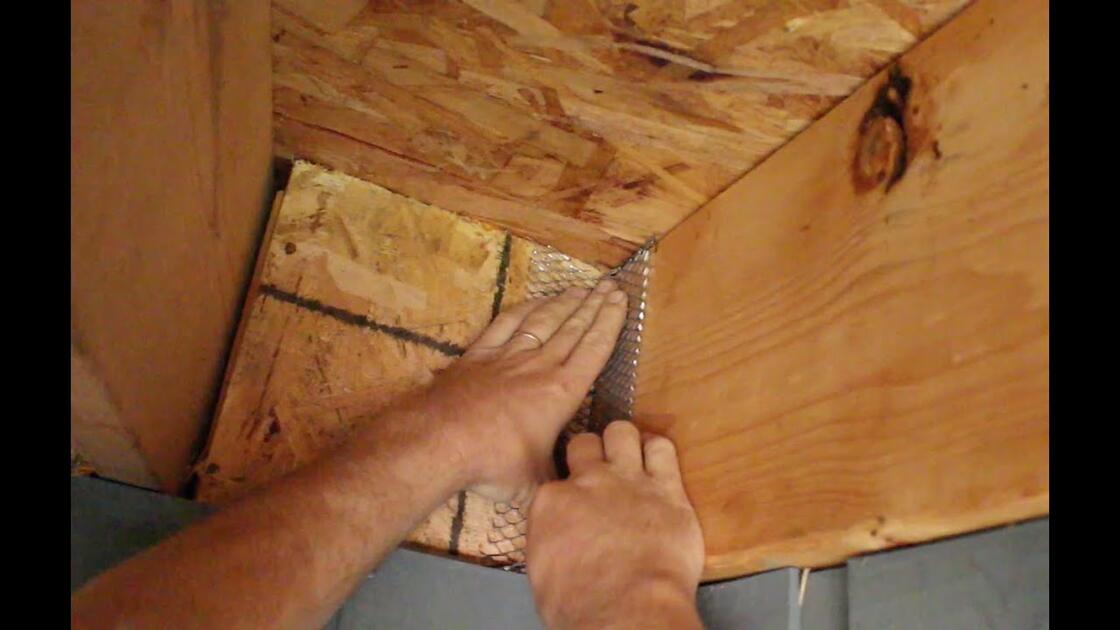
Video: How to keep mice out. Cheaper than hardware cloth, from Ontario Lakeside.
How a rodent job runs in San Diego
The same sequence on every call, with sealing as the spine, because closing a house full of rats and trapping a house with open eaves both fail.
-
Call and describe it
Where the noise is, what time of night, how long, and what you have found. That narrows the species before anyone drives out.
-
Free inspection
Roofline, attic, crawl space, yard and trees walked, every opening recorded, an itemized quote written from it.
-
Seal the unused openings
Hardware cloth, sheet metal and tile eave closures shut everything except the runs still in use, so nothing is trapped inside a wall.
-
Trap the animals still inside
Snap traps on the active runs, left at least a week because roof rats are wary of new objects, checked and reset.
-
Close the last runs and restore
Once activity stops, the final openings are closed and the attic is cleaned or re-insulated where the damage calls for it.
Which service fits the call
A typical job runs two or three of these back to back, and each one carries its national band so the budget is roughly known before the inspection.
-
Roof rat removal
Trapping on the active runs, sequenced with sealing. HomeGuide's 2026 national band for trapping and removal is $250 to $1,200. Roof rat removal.
-
Rodent exclusion
Tile eaves, open rafter bays, gable and foundation vents and utility gaps closed in metal to the quarter-inch standard. Full-home exclusion runs $500 to $2,500 nationally per HomeGuide. Rodent exclusion.
-
Rodent inspection
Free here; the national guides price a standalone inspection at $0 to $175, and forum threads describe paying around $75 just to get a bid. Rodent inspection.
-
Attic cleanup
Droppings, urine-soaked insulation and nests removed, then sanitized. HomeGuide puts cleanup and decontamination at $600 to $2,500 nationally. Attic cleanup and decontamination.
-
Insulation replacement
New material after the soiled fill is out, at $2.50 to $5.50 per square foot nationally. The Department of Energy notes compressed and wet insulation falls short of its rating. Attic insulation replacement.
-
Dead rodent removal
Tracking a carcass down inside a wall or attic, taking it out, and shutting the route it used. $150 to $500 nationally in HomeGuide's figures. Dead rodent removal.
-
Clearance letters
A written inspection report for an escrow, a lease or an insurance file, priced as the inspection plus any sealing found necessary. Rodent clearance letters.
-
Poison-free rodent control
What California's rodenticide law leaves legal at a house and why trapping plus sealing is the program. Poison-free rodent control.
Where the contractors are dispatched
The City of San Diego and the county around it, with pages for the neighborhoods and cities that call most: the canyon-rim districts, the coast, and the tile-roof suburbs inland.
Questions San Diego homeowners ask first
Straight answers to what comes up on nearly every call.
How long does it usually take to get rid of rats?
Longer than most quotes admit, and shorter once the house is sealed. HomeGuide's national guide gives two to three days to trap a small number of animals and one to two months for a severe infestation. The people online describing four months with no result are almost always describing trapping with nothing sealed. Closing the eave is what gives the trapping an end date.
Is it roof rats or mice?
In San Diego County it is a roof rat far more often than a mouse. Noise after dark in the ceiling, droppings a quarter to half an inch long with pointed ends, and rub marks along beams are the roof rat pattern per the University of Florida extension. Mice leave droppings under a quarter inch and work inside cabinets; squirrels are the daytime footfalls.
What keeps rats away permanently?
A sealed house. Repellents, ultrasonic plugs and bait do nothing about the opening, and a roof rat travels around 150 yards from its den according to UF/IFAS, so a canyon behind the fence or a palm two lots over keeps the pressure on for as long as the eave is open. Hardware cloth at the vents, a metal closure along a tile eave and screened foundation vents are what hold.
What is the cheapest way to get rid of rats?
The cheapest route that ends is snap traps plus sealing, done properly once. HomeGuide's 2026 national bands put trapping and removal at $250 to $1,200 and full-home exclusion at $500 to $2,500. A bait-only plan looks cheaper on the day and tends to produce a dead animal in a wall and a return visit, which is how the bill grows.
Can a company still use rat poison at my house?
Only a narrow list. AB 1788 prohibited the second-generation anticoagulants at homes statewide from January 1, 2021, and AB 1322 added diphacinone from January 1, 2024, with exemptions limited to sites such as food warehouses and medical waste generators. What remains for licensed use at a house is a short list of other baits, and the contractors we route work with traps and sealing instead. The California Department of Pesticide Regulation publishes the details.
Who turns up, and are they licensed?
An independent San Diego contractor whose company holds a Structural Pest Control Board PR registration for Branch 2 work, which is what rodent control for hire requires in California. Ask whoever attends for the PR number and check it at pestboard.ca.gov before work starts. Insulation replacement is contractor work under the Contractors State License Board and is routed to a contractor licensed for it.
Your question is probably on this list. If it is not, the line is open.

Hearing it tonight?
Call now and a dispatcher lines up the nearest registered contractor for a free inspection. Or leave your name and number and someone calls you back.