Commercial Rodent Control in San Diego, CA
Trapping, sealing and written records for restaurants, warehouses, apartment communities, offices and medical premises across San Diego County. Under AB 1788 and AB 1322, most commercial sites run on traps and exclusion, and the paperwork is built for a health inspection.
- Records for health inspections
- Trap and seal under state law
- Free site inspection first
What commercial rodent control in San Diego includes
Commercial rodent control is a site inspection, a sealing program for the building shell, a trapping and monitoring program inside, and a written record of all three that can be handed to a health inspector, a landlord, a franchisor or an insurer. On most San Diego premises it runs without anticoagulant bait, because state law removed the strongest baits from ordinary commercial sites and the contractors we route work to that law.
The scope changes with the building, but the parts are constant. Whoever attends walks the exterior at grade and at the roofline, the loading dock, the trash enclosure, the utility penetrations and the drop ceiling or attic, and reads the interior for droppings, rub marks and gnawing. Sealing comes first. Traps go in on the runs the same day, numbered and mapped. Follow-up visits check and reset, and each visit adds a page to the site log.
- Exterior and interior inspection with a map of activity and entry points
- Sealing of every opening a quarter inch or larger with hardware cloth, sheet metal, door sweeps and metal eave closures
- Numbered snap trap and multi-catch stations on a station map, checked on a schedule
- Sanitation and storage recommendations written for the manager, with the items that a health inspector will look at first
- A site log: dates, stations, catches, openings sealed, materials used, the company's PR number
- Attic, drop-ceiling or crawl-space cleanup priced as its own line where contamination is found; see attic cleanup
- A monitoring schedule quoted separately from the initial work, so the two can be compared with another bid
The site log is the part a manager ends up using most. A health inspector who asks about the trap under the prep sink wants a date, a station number and a company name, and a binder that answers that in one page changes the tone of the visit.

Restaurants, warehouses, multifamily, offices and medical premises
Each type of commercial premises has its own pressure point, and the work is planned around it: the back door and grease enclosure at a restaurant, the dock and racking at a warehouse, the shared attic at an apartment building, the drop ceiling at an office, and the sterile-zone rules at a medical site.
Restaurants and commercial kitchens
A restaurant is entered at the back: the delivery door propped open at 6am, the gap under the dock plate, the grease enclosure, the gap where the gas line enters the wall. Inside, the runs are along the wall behind the line and under the dish area. The program is door sweeps and metal thresholds, hardware cloth on every penetration, snap traps in tamper-resistant stations along the runs, and a log that names each station. The County of San Diego Department of Environmental Health inspects food facilities, and a rodent finding during an inspection is the kind of thing that ends up in a public grade, so the log exists to be shown.
Warehouses and distribution
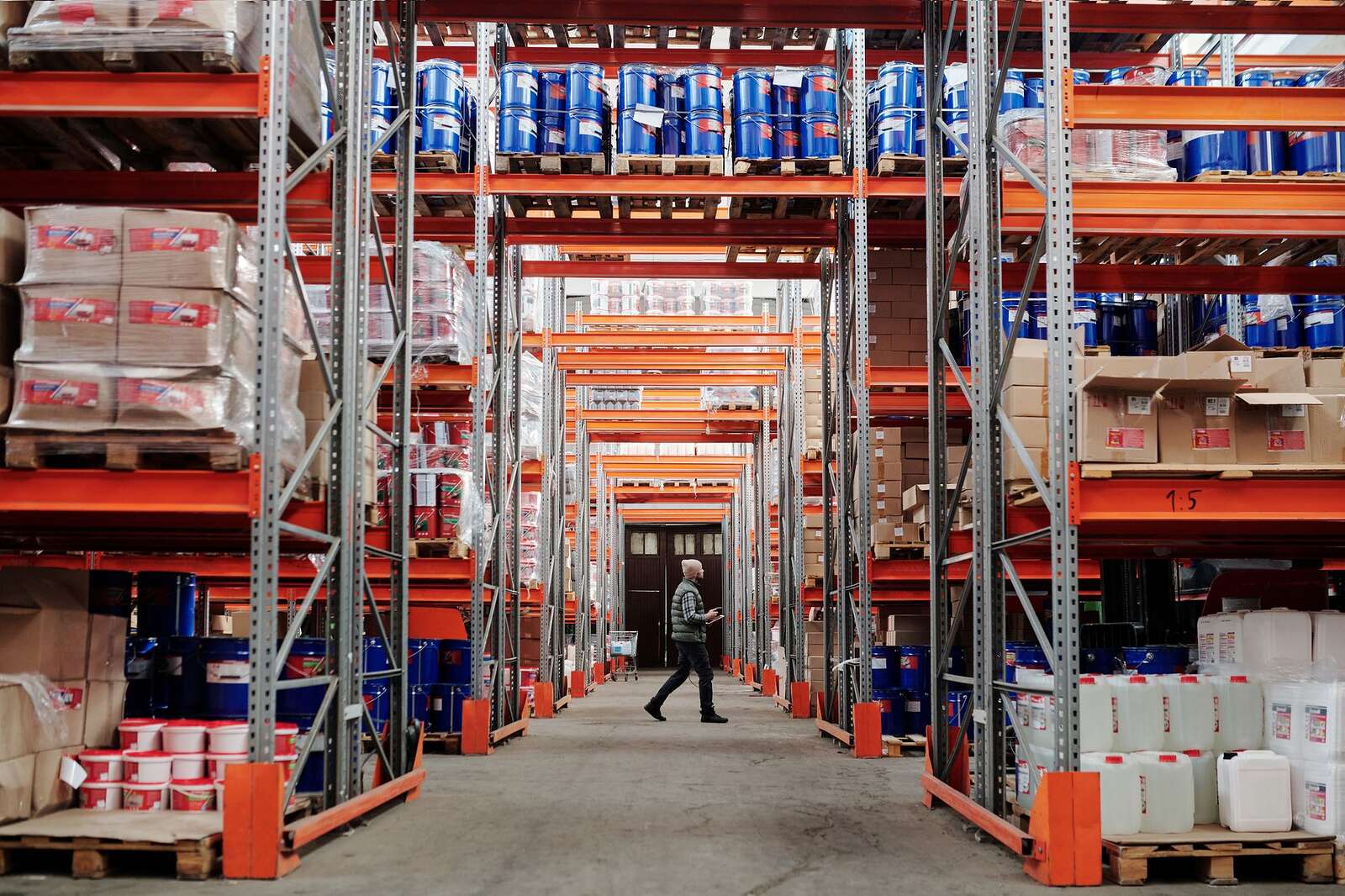
A warehouse is a big shell with a lot of doors. Dock doors that do not seal at the corners, roll-up doors with worn side seals, and conduit penetrations high on tilt-up walls are the entries, and pallets of packaged food or paper goods are the harborage. The program is brush seal and rubber at every door, mesh at the penetrations, a station line along the interior walls, and stock rotation advice for the floor manager. Food warehouses are one of the site classes where state law still allows second-generation anticoagulants, and that is discussed below.
Multifamily buildings and HOAs
Apartment communities and attached townhomes share attics, plumbing chases and landscaping, so a rat in unit 14 is a building problem. The roof rat is the county's common rat and it climbs; in a garden-style complex with mature palms, ivy on the slope and a canyon behind the parking lot, the roofline of every building is the entry. The program treats the whole building shell as one job: eave closures, vent screens, chase sealing between units, and a station plan in the common attic. The written record settles the recurring HOA question of whose responsibility the problem is. The rodent exclusion page covers the sealing materials.
Offices
An office building usually has a rodent problem in the drop ceiling and the break room. Entry is at the roof, through mechanical penetrations and the parapet, or at grade through a loading area shared with a neighboring tenant. The program is the same trap-and-seal sequence, worked after hours where the tenant wants it, with stations above the ceiling tiles and a sealing list for the building engineer.
Medical and dental premises
A clinic needs the work done without bait in patient areas and with a record that satisfies its own compliance reviews. Snap traps in enclosed stations, sealing of every penetration in the mechanical room and the roof, and a log in the format the practice manager needs. Medical waste generators are on the state's exempt site list for second-generation anticoagulants, but an ordinary clinic that generates a small volume of sharps should read that exemption carefully before anyone proposes bait, and most will find trapping and sealing is the sound program regardless.
Signs of a rodent problem at a commercial premises
The first sign at a business is usually droppings along a wall behind stock or equipment, followed by gnawed packaging, grease rub marks on a pipe or ledge, and a night crew that has heard something in the ceiling. Staff notice before managers do, and a program that asks staff what they have seen finds the problem faster.
| Sign | What it means | Where to look first |
|---|---|---|
| Droppings, a quarter to half an inch, pointed at the ends | Roof rat, per the UF/IFAS description; fresh ones are soft and dark | Behind the line, under the dish area, along dock walls, on top of ceiling tiles |
| Gnawed cartons, bags or wire insulation | Active feeding or nesting; chewed wiring is a fire concern, and UF/IFAS states that rats chewing wires can potentially start fires | Dry storage, racking, electrical rooms, the ceiling void |
| Grease rub marks on pipes, ledges and door frames | An established run used nightly | Along the path from the back door to food or water |
| Nesting material in a ceiling, motor housing or pallet | Breeding on site; UF/IFAS gives roof rat litters of five to eight, four or five times a year | Above ceiling tiles, inside equipment bases, under stacked pallets |
| Odor in a wall or ceiling | A dead animal, often from a previous bait job | Nearest wall cavity to the last bait station; see dead rodent removal |
The health side is why a business acts faster than a household. The CDC states that rodents carry many diseases, spread directly through urine, droppings, saliva and bites and indirectly through the fleas, ticks and mites that fed on them. A food facility with droppings on a prep surface has a contamination problem that day.
What AB 1788 and AB 1322 allow at a San Diego business
California's rodenticide moratorium leaves a short list of site types where second-generation anticoagulants and diphacinone may still be used, and an ordinary restaurant, office, apartment building or clinic is on no part of it. AB 1788, effective January 1, 2021, prohibits brodifacoum, bromadiolone, difenacoum and difethialone statewide except at medical waste generators, food and drug manufacturing facilities, slaughterhouses, breweries and wineries, food warehouses, agricultural sites and locations covered by a declared public health emergency. AB 1322, effective January 1, 2024, adds the first-generation anticoagulant diphacinone to the same moratorium, with diphacinone products sold only through licensed dealers. The California Department of Pesticide Regulation publishes question-and-answer pages on both, and the bill texts are on the state legislature's site.
| Premises | Second-generation anticoagulants and diphacinone | What the program looks like |
|---|---|---|
| Restaurant, cafe, commercial kitchen | Prohibited | Trapping, sealing, sanitation, log |
| Office, retail, hotel | Prohibited | Trapping, sealing, log |
| Apartment building, HOA, attached townhomes | Prohibited | Whole-shell sealing, common-attic trapping, per-unit record |
| Ordinary medical or dental clinic | Prohibited unless the site qualifies as a medical waste generator under the exemption | Trapping and sealing in practice |
| Brewery or winery | Exempt site class | Trapping and sealing first; bait only where a licensed applicator documents the need |
| Food warehouse, food or drug manufacturing, slaughterhouse, agricultural site | Exempt site class | Same: exclusion is the program, bait is a documented exception |
San Diego County has a great many breweries, and a brewery is one of the few commercial site classes the law exempts. A brewery owner should be told that plainly: bait remains legally available to a licensed applicator at that site. It should also be told that an exemption is permission, and that trapping and sealing still do the job with no carcass in a wall next to a fermentation room. A quote for an ordinary restaurant or office that leans on second-generation anticoagulants is a red flag on two counts, because it proposes a prohibited product and because it skips the sealing that ends the problem.
What stays legal for licensed use at any commercial site is narrow: non-anticoagulant baits such as bromethalin and cholecalciferol, and the first-generation anticoagulants warfarin and chlorophacinone. The poison-free rodent control page goes through that list and what each product does inside a building.
What is the cheapest way to get rid of rats at a business?
The cheapest program over a year is the one that seals the building first, because every other approach buys the same trapping visit again next month. Businesses that price rodent control by the monthly fee alone end up on a monitoring contract that never ends, with stations that keep catching because the dock door still has a gap at the corner.
The arithmetic is plain. A sealing job is a one-time line. A station program with nothing sealed is a recurring line for as long as the rats keep coming, and in San Diego they keep coming, because the county's roof rat breeds all year and a canyon or a palm-lined parking lot is a standing supply. UF/IFAS puts the roof rat's range at around 150 yards from its den, which means a restaurant with a canyon slope across the alley is inside range permanently.
The honest cheap option at a small premises is door sweeps, hardware cloth on the penetrations, and a few snap traps checked by the manager, with a professional inspection to find the openings the manager cannot see from the ground. The free inspection is where that list comes from.
Is it safe to do exclusion before trapping at a site that cannot close?
Sealing first is safe at an operating business when traps go in the same day, because the animals inside then have a trap on every run and no reason to chew a new exit into a dining room. What fails is sealing on Monday with trapping scheduled for the following week, and the reverse failure is a station program with nothing sealed, which the pest forums describe as harvesting rodents.
The sequence at an operating site is worked around the hours. Exterior sealing is done during the day with no disruption inside. Interior stations go in after close or before open, numbered on a map. UF/IFAS advises leaving traps in place for at least a week because roof rats avoid new objects, so the first check is scheduled for a week out and the log starts there. A one-way door at the last known main entry lets anything inside leave while the rest of the shell is closed, and it is removed and sealed on the return visit.
A kitchen that has been open with rats in the ceiling for months has usually had staff say so for most of those months. The sealing visit is the point where that stops being an argument between the crew and the owner.
Trapping, sealing and bait compared, with the records each one leaves
Trapping and sealing leave records a health inspector can read, and bait leaves a product label and, often, a dead animal somewhere in the structure, which is why the program at a commercial premises is built on the first two. Documentation is a method in its own right at a business.
| Method | Where it fits | What the log records | Drawback |
|---|---|---|---|
| Sealing: hardware cloth, sheet metal, door sweeps, metal bird stop at tile eaves | Every site, first | Each opening, its location, the material | Ladder and after-hours time on a large shell |
| Snap traps in tamper-resistant stations | Every site, on the runs | Station number, date checked, catch | Needs a check schedule; a full trap is a smell |
| Multi-catch and glue stations | Low-activity monitoring after the initial knockdown | Station number and count | Glue boards need frequent checks in a food area |
| Non-anticoagulant bait (bromethalin, cholecalciferol) by a licensed applicator | Exterior stations at some sites, kept out of every food area | Product, placement, EPA label | No control over where the animal dies |
| First-generation anticoagulants (warfarin, chlorophacinone) by a licensed applicator | Same limits | Same | The EPA notes anticoagulant death comes days after feeding starts, which is time enough to reach a wall void |
| Second-generation anticoagulants and diphacinone | Exempt site classes only | Documented need at an exempt site | Prohibited everywhere else |
| Expanding foam alone | Nowhere as a closure | Nothing useful | Chewed open; hides the hole from the next inspector |
The health inspection record is a binder or a shared folder with the station map, the visit log, the sealing list with materials, the sanitation recommendations and the company's Structural Pest Control Board PR number. The contractors we route produce it as part of the job, because a food facility that cannot show its program to an inspector is treated as if it has none.
What commercial rodent control costs in San Diego
Commercial work is priced from the same components as residential work, inspection, sealing, trapping and cleanup, scaled to the size of the shell and the number of doors, and then a monitoring schedule is quoted as its own line. The bands below are national typical-job figures from HomeGuide's 2026 cost guide and there is no published San Diego commercial survey; a large warehouse or a multi-building complex sits above them, and the free inspection produces the itemized number.
| Component | National band (HomeGuide 2026) | What scales it at a business |
|---|---|---|
| Site inspection | $0 to $175 | Free through the contractors we route |
| Exclusion sealing | $500 to $2,500 per single-family home | Door count, dock doors, roof penetrations, number of buildings |
| Trapping and removal | $250 to $1,200 | Station count, after-hours visits, check frequency |
| Cleanup and decontamination | $600 to $2,500; severe cases toward $4,000 | Ceiling void or attic size, contamination depth |
| Dead animal location and removal | $150 to $500 | Wall or ceiling access, usually after a prior bait job |
| Ongoing monitoring | Quoted per visit or per month by the contractor | Station count and visit frequency; ask for it as a separate line |
The number to watch at a business is the monitoring line. A fair quote states the initial sealing and knockdown as one figure and the monitoring as another, with the check frequency written down. A quote that folds the two into one monthly fee makes it impossible to tell whether the sealing was ever done. For an apartment community, ask for the sealing per building and the common-attic trapping as separate items so the board can compare bids.
Commercial premises across San Diego County
The commercial rodent problem in San Diego is a roof rat problem with a building attached, because the county's common rat climbs, arrives from palms, ivy and canyon slopes, and enters at the roofline and the doors. County Vector Control notes that Norway rats are uncommon here, so burrow-based programs designed for other cities are the wrong shape for most local sites.
Restaurants in the older neighborhoods
Commercial strips in North Park, Hillcrest, South Park and Ocean Beach sit in single-story pre-war buildings with parapet roofs, open rear yards, shared walls with the next tenant and alleys lined with mature trees. A rat in one restaurant's ceiling is usually in the neighbor's too, and the sealing has to address the shared wall line and the parapet as well as the back door.
Apartment communities and HOAs on canyon rims
Garden-style complexes from the 1960s through the 1980s in Clairemont, Mission Valley, Tierrasanta and Rancho Bernardo back onto canyon land, carry palms and ivy in the landscaping, and run concrete tile with bird stops that have crushed or gone missing over forty years. The bird stop is a named code-approved metal closure, and the Department of Energy lists bird stopping among its recommended tile-roof measures, so a per-building eave closure is the core of the sealing scope on that stock. Communities that budget for it once stop paying for trapping every winter.
Warehouses and breweries
Distribution space in Otay Mesa, Miramar and Kearny Mesa is tilt-up with many dock doors, and the county's brewery cluster in Miramar, North Park, Vista and beyond is in similar industrial shells with grain on the premises. Both share the same entries: dock door corners, roll-up seals, and high conduit penetrations. A brewery is an exempt site class under state law and may hear bait proposed; the sealing scope is the same whether bait is used or left out.
Season
Indoor activity peaks from October to February, and the calls from restaurants cluster after the first fall rains and after the holidays. With no hard freeze, a station line that catches in December is still catching in July unless the doors and eaves have been closed.
Licensing
Rodent control at a commercial premises is Branch 2 work under the Structural Pest Control Board, performed by licensed Applicators, Field Representatives and Operators working for a registered company with a PR number. Every company we route holds that Branch 2 registration. Ask for the PR number and confirm it at pestboard.ca.gov before work starts. Where contaminated insulation in a ceiling or attic is replaced as a contracted repair, that is Contractors State License Board work and is routed to a contractor with the CSLB license for it.
What to check on a commercial rodent quote
A commercial quote should name the openings and materials, separate the initial work from the monitoring, state what the visit log will contain, give the PR number, and describe warranty terms and follow-up in writing. Ask for the same answers from every bidder so the bids can be laid side by side.
- What is the PR number, and does it check out at pestboard.ca.gov?
- Which openings did the inspection find, and does the quote list each one with the closure material named?
- What warranty covers the sealing, how long does it run, and what happens if activity returns inside the term?
- Is the monitoring a separate line, and can it be stopped once the building is quiet?
- What does the log record at each visit, and can the manager keep a copy on site for inspections?
- Does the proposal use any anticoagulant bait, and if so, which product and where, given the state moratorium?
- How many follow-up visits are in the initial price?
The bait question is the one most commercial quotes fail. A proposal for a restaurant or an office that names brodifacoum, bromadiolone or a diphacinone product is proposing something the law prohibits at that site. The about page explains what the routed contractors are expected to document, and the contact page is the place to describe the premises and the hours the work has to fit.
Services that usually go with this one
A San Diego rodent job is a sequence, and these pages cover the steps on either side of this one.
- Rodent Exclusion: Closing tile eaves, open Craftsman rooflines, crawl-space vents and utility gaps to the quarter-inch standard.
- Rodent Inspection: A free walk of the roofline, attic, crawl space and yard that decides the order of the job.
- Poison-Free Rodent Control: What AB 1788 and AB 1322 changed, what is still legal, and why trapping plus sealing is the program here.
How the steps fit together is set out on the about page, and the phone line answers the rest at any hour.
Pest control in a food premises
The standard a commercial kitchen is held to.
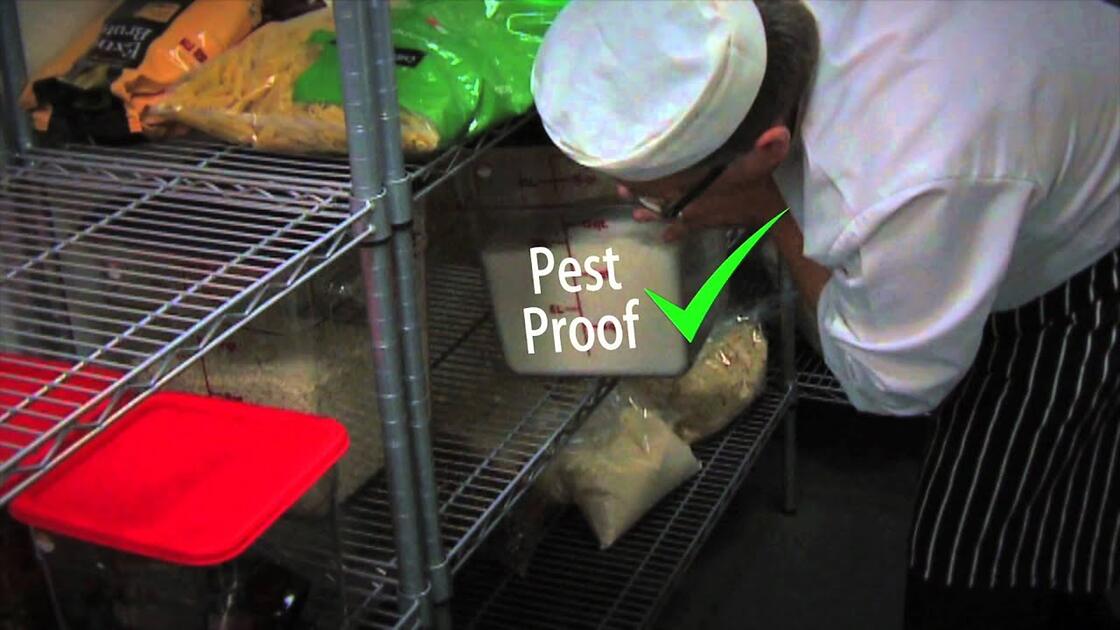
Video: Food safety coaching: pest control, from Food Standards Agency.
How a commercial rodent program runs in San Diego
The shell is sealed first, trapping runs inside from the same day, and every visit adds to the site log.
-
Site inspection and map
Whoever attends walks the exterior, the roofline, the docks and doors, and the interior runs, then maps activity and every opening a quarter inch or larger. The inspection is free.
-
Itemized proposal
Sealing, initial trapping, any cleanup and the monitoring schedule are quoted as separate lines, with the check frequency and the log format written down.
-
Sealing and stations the same day
Doors get sweeps and thresholds, penetrations get hardware cloth, tile eaves get metal closures, and numbered stations go in on the runs after hours where needed.
-
Checks and log entries
Stations are checked and reset on the schedule, catches and any new sign are recorded, and any opening that was missed is closed on the spot.
-
Handover for inspections
The manager receives the station map, the visit log, the sealing list with materials and the PR number, kept on site for the health inspector.
Why San Diego businesses route rodent work through us
Built to the state's rodenticide law
The contractors we route plan every ordinary commercial site as a trapping and exclusion job, because AB 1788 and AB 1322 leave second-generation anticoagulants and diphacinone available only at a short list of site types, and a restaurant, office, clinic or apartment building is on none of it. Where a premises is an exempt class, a brewery or a food warehouse, the owner is told so and the sealing scope stays the same. A proposal that names a prohibited product at a prohibited site is turned down before it reaches you.
AB 1788 (effective January 1, 2021) and AB 1322 (effective January 1, 2024), per the California Department of Pesticide Regulation
A log the health inspector can read
Every visit on a job we route produces a page: station numbers, dates, catches, openings sealed and the material used, under the company's Structural Pest Control Board PR number. That binder is what a food facility shows the County Department of Environmental Health, what an apartment board shows a resident, and what a franchisor asks for at audit. Most commercial pest invoices record a visit and a fee. A station map and a sealing list record a program.
Structural Pest Control Board: Branch 2 work is performed under a registered company's PR number, checkable at pestboard.ca.gov
Sealing quoted once, monitoring quoted apart
Commercial rodent contracts are where the never-ending monthly fee lives. On jobs we route, the sealing and initial knockdown are one figure and the monitoring is another, so a manager can see when the building is closed and decide how much monitoring to keep. National typical-job bands frame the initial work: HomeGuide 2026 lists trapping from $250 to $1,200 and exclusion sealing from $500 to $2,500 per house, with commercial shells scaling by door count and building count.
HomeGuide 2026 national: trapping $250 to $1,200; exclusion $500 to $2,500
What Reddit Says About Commercial Rodent Control in San Diego
Threads about rodents at a business are mostly written by employees, managers and small owners, and they read like the homeowner threads with a deadline attached. The vetting advice is the same: several bids for identical scope, itemized so the sealing, the trapping and any monitoring contract are separate lines, and a preference for a local operator over a national brand. People ask whether the company does the repair work or only sets stations, because a station-only vendor at a restaurant is a monthly fee with no end date.
The red flags are sharp in a commercial setting. A bait-only program with nothing sealed is the most criticized practice in the corpus, and the claim that poison makes rats go outside for water is called out as a myth used to excuse a dead animal in the wall. Monitoring contracts folded into the removal price come up repeatedly, with monthly and bimonthly fees quoted in threads as an example of paying for the same visit forever. Vendors who keep returning for months with the same result are named as the reason to get a second opinion.
The questions people tell each other to ask work as a manager's checklist. What is included and what is a separate line? Is the sealing warrantied, and does it renew? How many follow-up visits are in the price? What happens if they come back? Will you clean and decontaminate the ceiling, or only trap? Add one for California: does the proposal rely on any anticoagulant bait, and is the premises one where the law still allows it?
The contractors we route quote the sealing once, the monitoring apart, and leave a log on site that answers the inspector before the question is asked.
A common commercial call from a North Park restaurant
The situation: A restaurant in a single-story pre-war building on a North Park commercial strip has had droppings on the dry storage shelf three mornings running. The closing crew has heard movement in the ceiling for weeks. The last vendor placed bait stations along the alley wall and came back monthly, and last month a smell arrived behind the dish area and lingered for two weeks. A county health inspection is due, and the owner is losing sleep over the grade as much as the rats.
What gets done: Whoever attends walks the alley side and finds a gap at the corner of the rear delivery door, an open conduit penetration above the grease enclosure, and a parapet flashing lifted where a tree limb rests on the roof. The shared wall line with the neighboring tenant shows rub marks above the ceiling tiles. The door gets a metal threshold and sweep, the conduit hole gets hardware cloth and sealant, the parapet is closed with sheet metal and the limb goes on a pruning list for the landlord. Numbered snap trap stations go in above the ceiling and along the line after close, and the bait stations are removed. A carcass from the earlier bait program is located behind the dish area wall and removed as a separate line.
How it turns out: The stations take three rats in the first week and none after. The binder left with the manager holds the station map, the sealing list, the visit dates and the PR number, and the inspector reads it and moves on. The owner keeps a light monitoring schedule for the winter and drops it in spring when the log stays empty.
Commercial rodent questions from San Diego managers and owners
These questions come from restaurant owners, property managers and HOA boards who have called about a rodent problem at a premises.
Can a pest company still use rat poison at my restaurant in California?
A restaurant is on no part of the exempt site list, so second-generation anticoagulants such as brodifacoum and bromadiolone have been prohibited there since AB 1788 took effect on January 1, 2021, and diphacinone joined them under AB 1322 on January 1, 2024. What a licensed applicator may still use is limited to non-anticoagulant baits like bromethalin and cholecalciferol and the first-generation anticoagulants warfarin and chlorophacinone, and none of them belong in a food area. In practice a restaurant program is trapping, sealing and a log, and a vendor proposing the prohibited products at your address is proposing a violation.
My brewery was told bait is legal there. Is that right?
Yes. Breweries and wineries are one of the site classes AB 1788 and AB 1322 exempt from the moratorium, so a licensed applicator may use second-generation anticoagulants and diphacinone at a brewery where the label allows it. That is permission, and the choice is still yours. Trapping and sealing close the grain store, the dock and the taproom without an animal dying inside a wall next to the fermenters, and the program leaves a log for your own audits. The contractors we route will say plainly which products the site qualifies for and quote the sealing scope either way.
Will the work disrupt service or need the kitchen closed?
Most of the work happens outside or outside business hours. Exterior sealing at doors, penetrations and the roofline is done during the day with no effect on service. Interior stations are placed and checked before open or after close, and the check itself takes minutes. The one thing that can need a closure is a heavy cleanup in a ceiling void above a food area, which is quoted as its own line and scheduled with the manager. The premises stays open through the rest.
What documentation will I have for a health inspection?
A station map with each station numbered and located, a visit log with dates, catches and any new sign, the sealing list naming each opening and the material used, the sanitation recommendations given to the manager, and the company name and Structural Pest Control Board PR number. It is left on site in a binder or a shared folder so the person on shift can hand it over. County inspectors want to see that a program exists and is being followed, and a dated log is the proof that it is.
Do I have to sign a monthly contract?
No. The initial sealing and trapping are quoted as a one-time job on their own. Monitoring is quoted separately, per visit or per month, with the frequency written down, and it can be reduced or stopped once the log has stayed empty. Some food facilities keep a light schedule year-round because their inspector expects it, and some office tenants stop after the winter. Ask any bidder to separate the two lines; a quote that will only give you one monthly number is hiding whether the sealing is in it.
Describe the premises and the hours, and the inspection gets scheduled.

Book a free site inspection for commercial rodent control in San Diego
Call (619) 853-5729 and describe the premises and the hours the work has to fit, or put it in the form. Someone answers around the clock, and the site inspection is free.