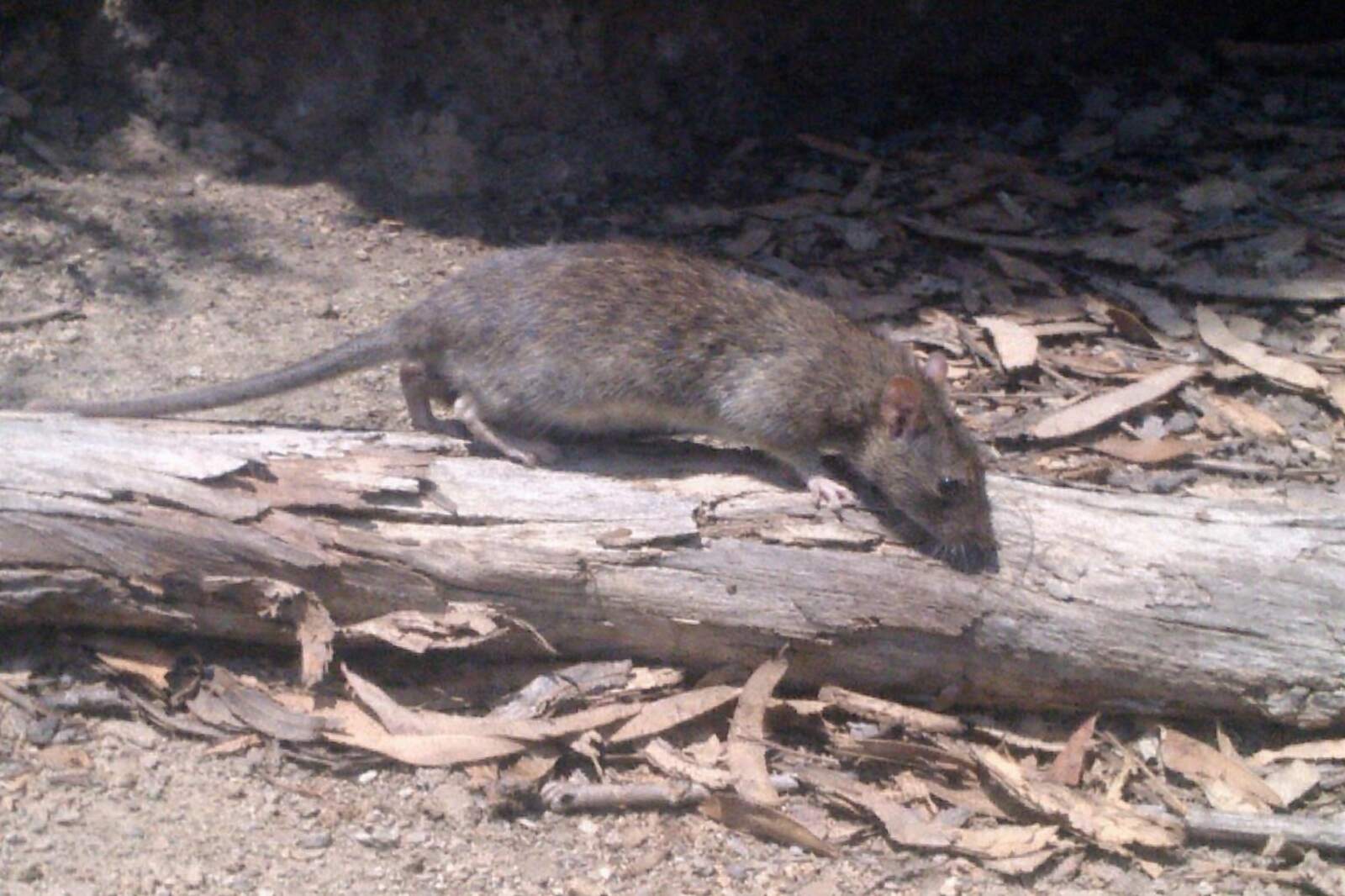
Roof Rat Removal in San Diego, CA
Roof rats are the rat San Diego gets, and they come in at the roofline from palms, ivy and canyon slopes. Trapping inside the attic, sequenced with sealing, is how they leave. Licensed contractors handle every job we route.
- Trapping plus sealing, poison-free
- Free attic and roofline inspection
- Phone answered 24 hours a day
What roof rat removal in San Diego includes
Roof rat removal in San Diego is a trapping program run inside the attic and along the roofline, sequenced with the sealing that stops the next animal, and finished with a check that the noise has stopped. It starts with a free inspection and ends with a written record of what was caught and what was closed.
The company we route sets snap traps on the runs the rats already use, checks them on a schedule, removes each carcass, and returns until several nights pass with nothing taken. Sealing is quoted from the same inspection and usually done on the first or second visit, because trapping alone in a house that still has an open eave is a harvest without an end. The sealing half of the program is described on the rodent exclusion page, and the attic work that often follows is on the attic cleanup page.
- A free roofline, attic and yard inspection with written findings (see rodent inspection)
- Snap traps set on active runs in the attic, along the top plates, at the eave line and in the garage
- Scheduled trap checks with carcass removal on each visit
- Entry points closed with steel mesh and metal closures, sequenced with the trapping
- A final visit to confirm no fresh droppings and no new gnawing
- A written record of catches, closures and anything left for a second trade
Most people who call have been awake at two in the morning listening to something run the length of the ceiling, and a fair number have been told by a friend that it is probably nothing. The scratching is real, and the job exists to end it.
Work out roughly what this job costs in San Diego
Seven questions, using the published national cost bands further down the page. The range is wide on purpose: the roofline and the foundation are the biggest variables and nobody can price either from a form.
Bands come from HomeGuide's 2026 national guides; no San Diego cost page exists to cite. Every figure is confirmed at the free inspection.
Roof rat, Norway rat, house mouse or squirrel: which one is in the attic
In San Diego the animal in the attic is almost always a roof rat, because County Vector Control identifies the roof rat as the county's most common rat and notes that Norway rats are uncommon here. The county also describes the roof rat as a climber, which is why the sound comes from the ceiling and the eaves and hardly ever from under the floor.
Telling the four apart matters because each one enters differently and is trapped differently. The table sets out what the inspection looks for.
| Animal | Size and shape | Droppings | Where it lives and when it moves |
|---|---|---|---|
| Roof rat | Slender, 12 to 14 inches nose to tail tip, with a tail longer than the head and body (UF/IFAS) | A quarter to half an inch, banana shaped with pointed ends (UF/IFAS) | Attic, eaves, palm skirts, ivy, citrus; active at night |
| Norway rat | Heavier, blunt nose, tail shorter than the body | Larger, blunt ended | Burrows at ground level; uncommon in San Diego County per Vector Control |
| House mouse | Small, 3 to 4 inches of body | Small and scattered | Kitchens, garages, wall voids; a minority of San Diego calls |
| Squirrel | Bushy tail, daytime animal | Rounded | Attic and gable vents; sounds in daylight, heavier footfalls |
Time of day is the quickest sort. Roof rats and mice run after dark; a squirrel is a morning and late afternoon animal. Where a mouse is the suspect, the local story is thin, and the free inspection settles it faster than a page can.
Signs of roof rats in a San Diego house
The first sign of roof rats in a San Diego house is noise in the ceiling after dark: running, scratching, and a dragging sound along the top of a wall. Droppings along the attic joists and gnaw marks at the eave line usually confirm it within a few minutes of looking.
- Running or scratching overhead between dusk and dawn, loudest in the hour after the house goes quiet
- Droppings a quarter to half an inch long, pointed at both ends, along joists, on the garage floor and on top of the water heater
- Gnawing at the eave, the fascia, a tile bird stop or a vent screen, with fresh pale wood showing
- Hollowed citrus on the tree, eaten from one side with the rind left
- Greasy rub marks where a body squeezes the same gap every night
- Insulation pushed into tunnels and mounds, and a musky smell at the attic hatch
- A pet staring at the ceiling or a wall
Rats chew wiring, and UF/IFAS notes that chewed wiring can potentially start a fire. That is a reason to move on a noise within days.
Where San Diego roof rats live, and when they come indoors
San Diego roof rats live outdoors first, in the dead-frond skirts of untrimmed palms, in ivy and dense vines on walls and slopes, in citrus and other fruit trees, and in the wet canyon bottoms that cut through the city, and they reach the roof along branches, fences and utility lines. UF/IFAS describes the species as arboreal and gives its range as about 150 yards from the den, which on a canyon-rim lot puts the den next door.
The canyon point matters more here than in most cities. Kensington, Talmadge, Mission Hills and much of Clairemont sit on canyon rims, and the canyon bottom is permanent habitat with water and cover all year. A house on the rim has a standing supply of animals that a trapping program removes and a sealing program keeps out. The neighborhood pages for Kensington and Talmadge and Clairemont go into the lots.
Coastal La Jolla, Pacific Beach, Ocean Beach and Point Loma have older cottages under mature landscaping and tall palms, which is the other high-pressure pattern. A palm skirt touching a roof edge is a bridge, and a citrus tree against a fence is a pantry with a ladder.
The October to February indoor peak
Roof rats move indoors in San Diego from October to February, when the nights cool and the rainy season starts, and the calls cluster after the first autumn rains and again after the holidays. The climate is mild enough that they breed all year, so the peak is about shelter and the rest of the year is about food and water.
Late summer has its own pattern. Dry spells and Santa Ana winds push animals toward irrigated yards, drip lines and the puddle under an air conditioner, and a house with a green lawn on a brown slope draws them in. There is no hard freeze and no true off season. UF/IFAS gives roof rats litters of five to eight, four or five times a year, which is why a noise ignored in November is a family by spring.
Why trapping is the method in San Diego under AB 1788 and AB 1322
Trapping is the method for residential roof rats in San Diego because state law has removed almost every rodenticide a pest company used to reach for. AB 1788, the California Ecosystems Protection Act, took effect on January 1, 2021 and prohibits the second-generation anticoagulants brodifacoum, bromadiolone, difenacoum and difethialone statewide except at a short list of sites such as food warehouses, slaughterhouses, breweries and declared public health emergencies. Residential use by a pest company is out.
AB 1322 followed on January 1, 2024 and added the first-generation anticoagulant diphacinone to the same moratorium. What remains legal for licensed use at a home is narrow: non-anticoagulant baits such as bromethalin and cholecalciferol, and the remaining first-generation anticoagulants warfarin and chlorophacinone. The California Department of Pesticide Regulation publishes question-and-answer pages on both laws, and the bill texts are public.
| Method | Legal at a San Diego home | What it does | What it leaves behind |
|---|---|---|---|
| Snap trapping inside the attic | Yes, no permit needed for roof rats or house mice (non-native, unprotected) | Removes the animals present, each one accounted for | Nothing; carcasses leave with the visit |
| Second-generation anticoagulant bait | Prohibited for residential use since 2021 (AB 1788) | Was the industry default | Poisoned animals dying in walls and secondary poisoning of predators |
| Diphacinone bait | Prohibited for residential use since 2024 (AB 1322) | Was the fallback after 2021 | Same dead-in-the-wall problem |
| Remaining legal baits | Licensed use only, in tamper-resistant stations | Kills over days | A carcass wherever the animal was when it died; the EPA notes anticoagulants take four days to two weeks to kill once feeding begins |
| Sealing | Yes | Stops the next animal | A closed house |
The California Department of Fish and Wildlife urges exclusion and trapping over rodenticides and prohibits trapping wildlife and releasing it somewhere else, so a roof rat caught in a San Diego attic is dispatched on site. UF/IFAS makes the practical case for the same choice: trapping reduces the chance of a poisoned animal dying inside the building. The poison-free rodent control page sets out the whole picture.
How long does it take to get rid of rats?
Getting rid of roof rats takes a few days for a small number of animals and one to two months for a severe infestation, according to HomeGuide's 2026 figures, and the sealing done alongside the trapping is what keeps a San Diego job at the short end. The long timelines people describe online almost always come from trapping in a house that was never sealed.
The first week is the slow part. UF/IFAS advises leaving traps in place for at least a week because roof rats are wary of new objects, so a trap that catches nothing on night one is behaving normally. Catches usually come in a cluster on nights three to six, then stop. The follow-up visit checks for fresh droppings; two quiet checks in a row with the closures holding is the end of the job. A large canyon-rim house with several open eaves, a palm bridge and an ivy slope takes longer because the supply outside is bigger, and the sealing has more to close.
What is the cheapest way to get rid of rats?
The cheapest way to get rid of rats is snap traps set well and left in place, with the openings closed before the last animal is caught, because that sequence is done once. Every other route costs more over a year: bait that leaves a carcass in a wall and a dead rodent removal bill, trapping that repeats every autumn because the eave was never closed, or a monthly plan that manages the problem without ending it.
A homeowner can do real work for free. Trim the palm skirts, cut branches back from the roof by several feet, pull ivy off the wall, pick up fallen citrus, fix the garage door sweep and store pet food in metal. County Vector Control will walk the outside of the house at no charge and hand over a starter kit, and that visit is worth taking; the county does no trapping, baiting or sealing, which is where the contractors we route come in. The costly part is the roofline, and the honest answer is that the cheapest roofline job is the one done with metal the first time.
What roof rat removal costs in San Diego
Roof rat removal in San Diego typically prices as trapping and removal in the low hundreds to low thousands, with sealing quoted as its own line, and the free inspection is what turns a band into a number for one house. The figures below are national bands from HomeGuide 2026; there is no San Diego cost survey to cite, so they are a starting frame and the inspection confirms them.
| Line item | National band (HomeGuide 2026) | What moves it |
|---|---|---|
| Inspection | $0 to $175 standalone; free here | Free with the call |
| Trapping and removal | $250 to $1,200 | Number of animals, number of visits, attic access |
| Full-home exclusion | $500 to $2,500 | Roof type, eave length, number of vents and penetrations, crawl space |
| Attic cleanup and decontamination | $600 to $2,500, up to about $4,000 severe | Square footage, how long the animals were there |
| Insulation removal and replacement | $2.50 to $5.50 per sq ft | Attic size, insulation type, access |
| Dead rodent removal | $150 to $500 | Whether a wall or ceiling has to be opened |
| Full-scope restoration | $3,000 to $10,000 and up | Extent of contamination and damage |
Two San Diego notes on those bands. The national guides price crawl-space work, and unlike slab-built markets many older San Diego houses on raised foundations have one, so that line applies here. Second, a house with a tile roof and a long open eave sits toward the top of the exclusion band because the bird stop runs the whole length; a stucco ranch with two vents and a line-set hole sits near the bottom. Ask for the quote itemized so trapping, sealing and any attic work can each be judged on their own.
San Diego houses and the roof rat: era, roof and foundation
The San Diego housing stock gives roof rats three kinds of doors, and which one a house has depends mostly on when it was built. Pre-1940 Craftsman and Spanish Colonial Revival houses in Mission Hills, Kensington, Talmadge, North Park, South Park, Golden Hill, Hillcrest, University Heights and Normal Heights have clay tile or open eaves above and a raised foundation with a crawl space and foundation vents below, so the entry can be at the roofline or the sill line.
The 1940s to 1960s ranch houses in Clairemont, Serra Mesa, Allied Gardens, Del Cerro, Bay Park and Point Loma have open eaves on canyon finger lots; NeighborhoodScout puts 86.4 percent of North Clairemont's homes in the 1940 to 1969 range. The 1970s to 1990s stucco houses in Tierrasanta, Mira Mesa, Rancho Penasquitos, Scripps Ranch and Rancho Bernardo carry concrete S-tile or barrel tile, and the classic entry is a missing or crushed bird stop at the eave. The Mission Hills and Scripps Ranch pages cover the two ends of that range.
Licensing is the same across all of it. Rodent control in California is Branch 2 of the Structural Pest Control Board under the Department of Consumer Affairs, and every applicator, field representative and operator must work for a registered company that carries a PR number. Each company we route carries the Branch 2 registration this work calls for. Where insulation replacement is contracted as a repair, that is Contractors State License Board work, and it is routed to a contractor with the CSLB license for it.
What to check before a rat contractor starts
Before any rat contractor starts in San Diego, check the company's PR number at pestboard.ca.gov, get the quote itemized, and ask what the follow-up visits and any warranty on the sealing cover. Those three answers separate a trapping program from an open-ended monthly plan.
- Ask for the PR number and confirm it at pestboard.ca.gov before work starts
- Ask which products, if any, will be used; a second-generation anticoagulant or diphacinone named for a home is a red flag under state law
- Get trapping, sealing and attic work as separate lines on the quote
- Ask how many trap checks are included and what a further visit costs
- Ask what the sealing warranty covers, how long it runs, and whether it renews
- Ask for the closure list at the end, naming each opening and the material used
The about page describes how a call is handled, and the contact page has the hours and the address.
Services that usually go with this one
A San Diego rodent job is a sequence, and these pages cover the steps on either side of this one.
- Rodent Exclusion: Closing tile eaves, open Craftsman rooflines, crawl-space vents and utility gaps to the quarter-inch standard.
- Rodent Inspection: A free walk of the roofline, attic, crawl space and yard that decides the order of the job.
- Attic Cleanup and Decontamination: Droppings, nests and soiled insulation out, the attic sanitized, without the scare stories.
How the steps fit together is set out on the about page, and the phone line answers the rest at any hour.
Working a roof rat problem end to end
A long walkthrough of a full roof rat job.

Video: Ultimate Roof Rat Solution, from Twin Home Experts.
How a San Diego roof rat job runs
Sealing sits in the middle of the sequence so the trapping ends instead of repeating.
-
Free inspection
Whoever attends walks the roofline, the attic, the crawl space if there is one, and the yard, then writes up the entry points, the runs and the outdoor harborage.
-
Traps on the runs
Snap traps go on the active runs the same visit, in the attic and at the eave line, and stay at least a week because roof rats avoid new objects at first.
-
Seal the openings
Bird stops, vent screens, foundation vents and penetrations are closed with quarter-inch hardware cloth and metal, sequenced with the trapping so nothing is shut inside.
-
Check and remove
Trap checks continue on a schedule with carcass removal each time, until several nights pass with nothing taken and no fresh droppings appear.
-
Confirm and record
A final visit confirms the closures are holding, and the homeowner receives a written list of what was caught, what was closed, and any attic work still to do.
Why San Diego homeowners route roof rat calls through us
Trapping that follows the law and ends the job
Every roof rat program we route is trapping plus sealing, with no second-generation anticoagulants and no diphacinone, because AB 1788 and AB 1322 removed them from residential use. That is compliance and it is also the better method: a snap trap accounts for every animal, and there is no carcass in the wall three weeks later. The California Department of Pesticide Regulation's Q&A pages on both laws are the reference, and the contractor can name them.
AB 1788 in force January 1, 2021; AB 1322 in force January 1, 2024 (California Department of Pesticide Regulation)
Registered Branch 2 companies, checkable by number
Every company we route holds the Structural Pest Control Board Branch 2 registration that rodent work in California requires, and carries a PR number a homeowner can look up at pestboard.ca.gov before the first trap is set. Applicators, field representatives and operators all work under that registration. Insulation replacement contracted as a repair goes to a contractor with the CSLB license for it.
Structural Pest Control Board Branch 2 registration, verifiable at pestboard.ca.gov
Published national bands and an itemized quote
The trapping band, the exclusion band and the attic bands are on the page with their source, and the quote a homeowner receives after the free inspection is itemized so each line can be judged on its own. HomeGuide's 2026 national figures put trapping and removal at $250 to $1,200 and full-home exclusion at $500 to $2,500, and the inspection turns those into one number for one house.
HomeGuide 2026 national cost bands, confirmed at the free inspection
What Reddit Says About Roof Rat Removal in San Diego
Homeowners on Reddit vet rat companies by collecting several bids for the same scope and refusing to read a single number as fair or unfair on its own. The bids they trust are itemized into trapping, sealing and cleanup, and the ones they distrust bundle a monthly monitoring plan into what was sold as a removal. There is a strong stated preference for a local operator over a national brand, and a recurring question of whether the company will do the repair work or only set traps.
The red flags are consistent across the threads. A poison-only plan with no sealing is the first, along with the line that poison makes rats thirsty so they go outside to die, which the corpus treats as a tell that the salesperson is either uninformed or dishonest. The second is trapping with no sealing, described in one thread as harvesting rodents in traps forever. The third is a company that keeps coming back for months with no change in the noise. Quotes for similar work range from under two thousand dollars to thirty thousand in the threads, and the question under most of them is whether the poster is being taken advantage of.
The questions people tell each other to ask are practical: what exactly is included and what is a separate line, whether the sealing carries a warranty and whether it renews, whether the company cleans and decontaminates or only traps, how many follow-up visits are included, and what happens if the rats come back. Timelines are the other theme. Two months is common in the threads and four months with no resolution appears, almost always where nothing was sealed.
The emotional side is louder than in most home-repair threads: broken sleep, a sense that the house has been invaded, and friends who say it is only a mouse. One thread is titled by someone who could not sleep and wanted any help at all.
In San Diego the poison question has a legal answer as well as a practical one. The anticoagulants that most of those threads argue about are off the table for a home under AB 1788 and AB 1322, so a contractor who proposes them is proposing something the state has prohibited, and the trapping-plus-sealing program the threads recommend is the one the law leaves.
A typical roof rat call from a canyon-rim house in San Diego
The situation: A 1920s Spanish Colonial Revival house on a Kensington canyon rim, clay tile roof, open eaves, raised foundation. The family has heard running along the hall ceiling every night since the first November rain and found droppings on top of the water heater in the garage. A neighbor said the canyon has always had rats and to buy some bait. They have not slept properly in two weeks.
What gets done: Whoever attends walks the eave and finds the bird stop missing along the canyon-facing side, a fig tree touching the tile at the corner, and a foundation vent screen rusted through at the sill. Snap traps go on the joist run above the hall and at the eave opening that afternoon and stay a full week. On the second visit the eave gets a manufactured metal bird stop, the foundation vent gets quarter-inch hardware cloth screwed to the framing, and the fig branch is noted for the homeowner to cut. No bait is used; the contractor explains the state law and why a carcass in the wall would be the likely result anyway.
How it turns out: Three adults come out of the attic in the first six nights and nothing after. The follow-up visit finds no fresh droppings, the closures holding, and the family sleeping again. They keep the closure list with the house papers and book the attic for a cleanup once the noise has been gone a month.
Roof rat removal questions from San Diego homeowners
These are the questions that come up on the phone line and in homeowner threads about rats in the attic.
Do I really need the chew-ins repaired now, or can I get away with trapping?
The chew-ins need closing during the trapping, because a roof rat run that stays open refills from outside, and on a San Diego canyon or palm lot the outside supply is permanent. Trapping first for a few days is normal so that nothing is shut inside, and then the openings are closed with metal while the traps keep working. A homeowner who traps and leaves the eave open usually calls again the next autumn. The closure list at the end is what makes the job finished instead of paused.
Why does the contractor use traps instead of poison?
State law and practical results point the same way. AB 1788 removed the second-generation anticoagulants from residential use in 2021 and AB 1322 removed diphacinone in 2024, so the baits most people picture are prohibited at a San Diego home. The few products still legal for licensed use kill over days, which with an attic animal means a carcass in a wall or ceiling and a smell that lasts weeks. A snap trap accounts for every animal and leaves nothing behind. The California Department of Fish and Wildlife recommends exclusion and trapping over rodenticides for the same reasons.
Is it a rat or a mouse making the noise?
A loud run along the ceiling after dark in San Diego is almost always a roof rat, since the county's Vector Control lists it as the common rat here and mice are a minority of calls. Droppings settle it: roof rat droppings are a quarter to half an inch with pointed ends, and mouse droppings are much smaller and scattered. Daytime noise with heavy footfalls points to a squirrel. If the inspection finds mice, the same trap-and-seal program applies with smaller traps and a quarter-inch standard on the openings.
Does the county get rid of rats for free?
County Vector Control offers a free outdoor educational inspection and a Rat Control Starter Kit, and its number is (858) 694-2888. That visit is worth taking, and the advice on trimming, harborage and hardware cloth is sound. The county does no trapping, no baiting and no sealing, so the work inside the attic and at the roofline is where the contractors we route take over. The inspection they carry out is also free, and it covers the attic and the crawl space along with the outside.
How much does it cost to get rid of roof rats in the attic?
HomeGuide's 2026 national bands put trapping and removal at $250 to $1,200 and full-home sealing at $500 to $2,500, with attic cleanup from $600 to $2,500 where it is needed. There is no San Diego survey to cite, so those are a frame and the free inspection produces the itemized quote for one house. A tile roof with a long open eave sits higher in the sealing band; a small stucco house with two vents sits low. Ask for trapping, sealing and attic work on separate lines.
The inspection costs nothing and the phone is picked up at every hour.

Book a free roof rat inspection in San Diego
Call (619) 853-5729 or send the form. Someone answers the line 24 hours a day, and the inspection that prices the trapping and sealing is free.