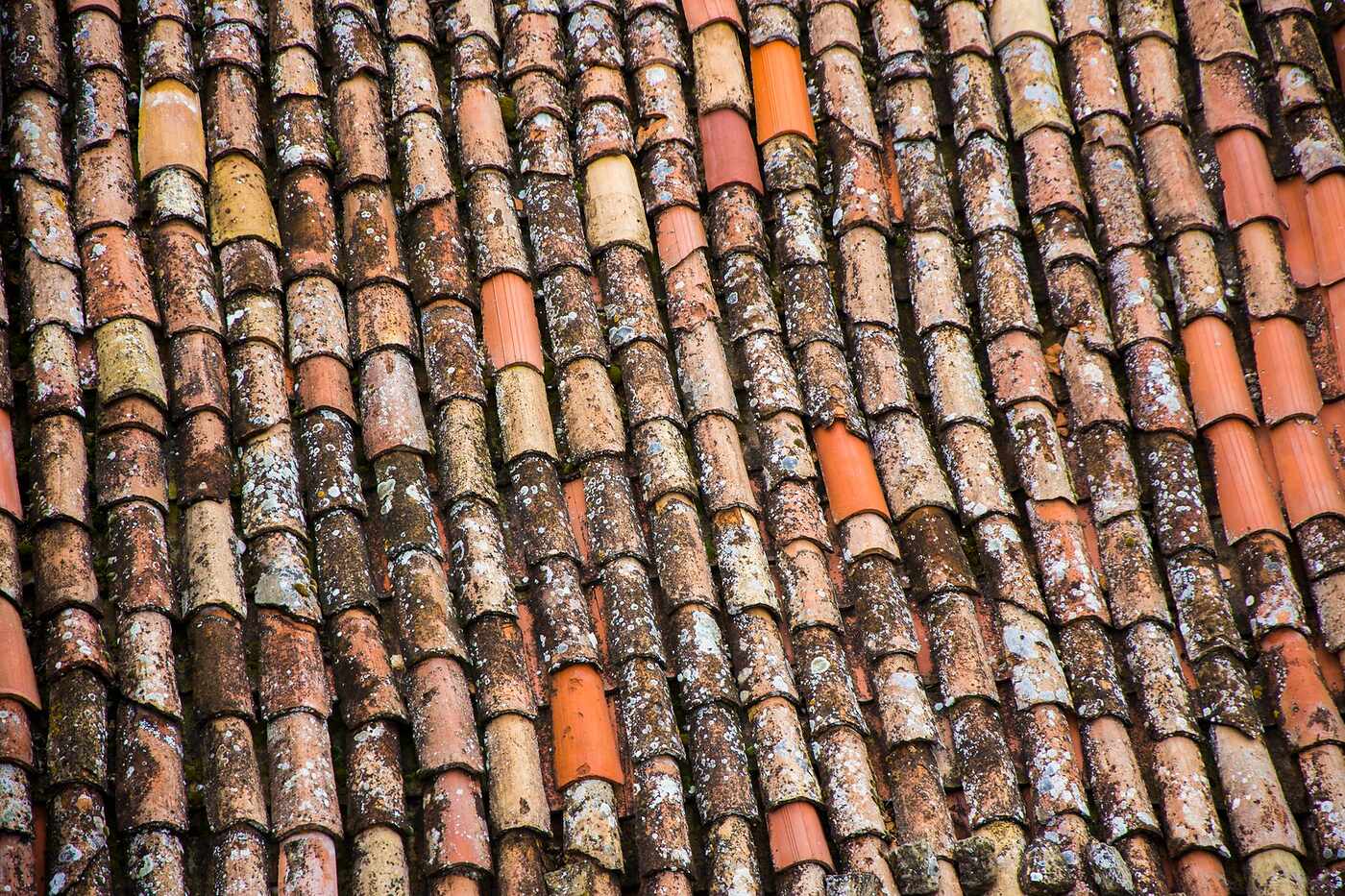
Rodent Exclusion in San Diego, CA
Exclusion is the sealing that makes a San Diego rat job permanent: the bird stop under the tile, the open eave, the foundation vent, the garage sweep and the palm bridge, closed with quarter-inch steel mesh and metal. Licensed contractors handle every job we route.
- Quarter-inch steel mesh and metal
- Tile eaves and crawl spaces covered
- Free sealing inspection first
What rodent exclusion in San Diego includes
Rodent exclusion in San Diego is the closing of every opening a quarter inch or larger in the building shell, from the tile eave down to the foundation vent, with materials a roof rat cannot chew through, sequenced with the trapping so nothing is shut inside. It ends with a written closure list naming each opening and what went into it.
A San Diego house has two zones to close where a slab-built market has one. The roofline carries the eave gap, the vents and the penetrations, and on a raised foundation the crawl space adds foundation vents, the sill line and the access hatch. Whoever attends works from a ladder, inside the attic and under the floor, and the trapping described on the roof rat removal page runs alongside.
- A free roofline, attic, crawl space and yard inspection with written findings (see rodent inspection)
- Manufactured metal bird stops fitted under the first course of clay or concrete tile where the original is missing, crushed or corroded
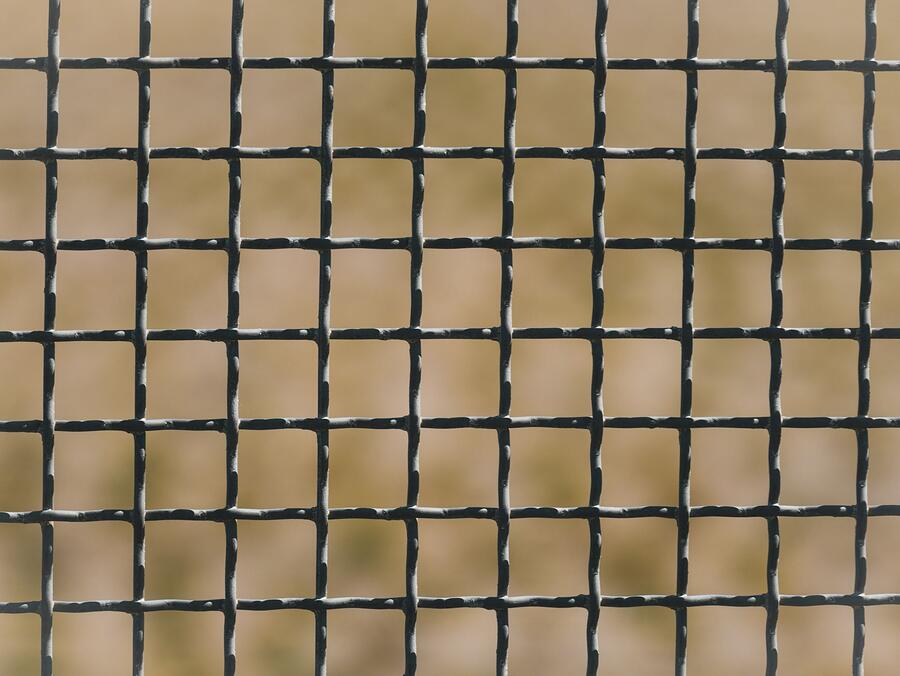
- Quarter-inch galvanized hardware cloth behind open-eave rafter tails, gable vents, ridge vent ends and attic vents
- Quarter-inch hardware cloth over foundation vents and a proper cover on the crawl space hatch
- Metal weather stripping and a new bottom sweep on the garage door
- Metal collars, mortar or hardware cloth at the air conditioner line set, cable, gas and plumbing penetrations
- Notes on palm skirts, ivy and branches that bridge to the roof, for the homeowner or a tree crew
- A closure list with the material used at each point
Sealing is the part of the job people did not expect to pay for and the part that gives the house back. A family that has spent a month listening to the ceiling gets to stop.
Work out roughly what this job costs in San Diego
Seven questions, using the published national cost bands further down the page. The range is wide on purpose: the roofline and the foundation are the biggest variables and nobody can price either from a form.
Bands come from HomeGuide's 2026 national guides; no San Diego cost page exists to cite. Every figure is confirmed at the free inspection.
Signs a San Diego house needs exclusion
A house needs exclusion when the rats keep returning after trapping, when the eave or a vent shows fresh gnawing, or when the free inspection finds an opening a roof rat can use even before any noise has started. The signs are on the outside of the building as often as inside it.
- Trapping that catches animals every autumn, which means the door was never closed
- Daylight visible under the first course of tile from inside the attic
- Chewed rafter tails on an open eave, with pale wood showing
- Rust holes or torn screen on a foundation vent, or a crawl space hatch that does not sit tight
- A garage door sweep with a gap at either corner
- Greasy rub marks around a pipe or cable where it enters stucco
- A palm with a full skirt of dead fronds within a body length of the roof
- Droppings on the sill plate under the house, a quarter to half an inch long with pointed ends, the size UF/IFAS gives for roof rats
Where rats get into a San Diego house
Rats get into a San Diego house at the tile eave, the open eave, the foundation vents on a raised foundation, the garage door, and the holes cut for utilities, and they arrive at those points along palms, ivy and branches. Each entry has its own closure, and the table sets them out.
| Entry point | Which San Diego houses have it | How it is closed |
|---|---|---|
| Bird stop gap under the first tile course | Clay tile on pre-1940 Spanish Colonial Revival houses; concrete S-tile and barrel tile on 1970s to 1990s stucco in Tierrasanta, Mira Mesa, Rancho Penasquitos, Scripps Ranch and Rancho Bernardo | Manufactured metal bird stop or eave closure fitted under the first course |
| Open eave between rafter tails | Craftsman houses in Mission Hills, North Park and Kensington; 1940s to 1960s ranch houses in Clairemont, Serra Mesa and Allied Gardens | Quarter-inch hardware cloth or sheet metal fitted between tails and against the wall |
| Foundation vents and sill line | Raised foundations with a crawl space across the pre-war neighborhoods | Quarter-inch hardware cloth screwed to the vent frame; gaps at the sill packed with metal and mortar |
| Crawl space hatch | Same raised-foundation stock | A tight-fitting cover with metal weather stripping |
| Garage door | Almost every house | New bottom sweep and metal weather stripping at the sides and top |
| Utility penetrations | Air conditioner line sets, cable, gas and plumbing through stucco | Metal collar, mortar, or hardware cloth behind the stucco patch |
| Gable, attic and ridge vents | Any vented attic | Quarter-inch hardware cloth inside the louver or at the vent ends |
| Palm and tree bridges | Coastal and canyon lots | Skirts trimmed, branches cut back from the roof, noted for the homeowner |
The quarter inch is the standard for the whole list. UF/IFAS states that a mouse needs only a quarter inch and a rat half an inch, and gives a quarter inch as the rat-proofing figure, which agrees with the County Vector Control recommendation of quarter-inch 18 to 22 gauge hardware cloth and metal weather stripping.
The bird stop on San Diego tile roofs
The bird stop is the metal closure that fills the gap under the first course of clay or concrete tile, and a missing, crushed or corroded one leaves a rat-sized void running the full length of the eave. It is a named building component with a manufactured product behind it: a code-approved closure, typically 26 gauge galvanized steel or aluminum, sometimes ventilated with weep holes so the eave keeps breathing.
San Diego has two tile eras and the gap is the same on both. The clay tile on the pre-war Spanish Colonial Revival houses in Mission Hills and Kensington was laid over an open eave, and the original closures have had ninety years to rust and fall. The concrete S-tile and barrel tile on the 1970s to 1990s houses in Scripps Ranch, Rancho Bernardo, Mira Mesa and Tierrasanta often had a foam or mortar closure that has since crumbled, or a metal one crushed by a foot on a ladder. The US Department of Energy lists installing bird stopping among its recommended measures for tile roofs, which is a useful thing to know when a quote calls the eave a problem.
The comparison that matters is a manufactured metal bird stop against a blob of expanding foam. Foam is chewed back open within days, it blocks the eave ventilation the tile depends on, and it hides the gap from the next person who inspects. A cheap exclusion quote on a tile roof usually means foam. The Scripps Ranch page has more on the concrete-tile stock.
Crawl spaces, foundation vents and the sill line
Many older San Diego houses sit on a raised foundation with a crawl space, so the foundation vents and the sill line are entry points alongside the roofline, and exclusion here covers both. The pre-1940 Craftsman and Spanish Colonial Revival stock in Mission Hills, North Park, South Park, Golden Hill, Hillcrest, University Heights, Normal Heights, Kensington and Talmadge is mostly built this way.
The county's own recommendation of quarter-inch 18 to 22 gauge hardware cloth is the right material for a foundation vent: cut to the frame, screwed to wood, and lapped so there is no edge to pry. The sill line is checked from inside the crawl space with a flashlight looking for daylight, and gaps at the mudsill or around a pipe are packed with metal and mortar. The hatch gets a cover that closes tight, with metal weather stripping on the frame.
A roof rat prefers the roof, but a rat that finds a vent open at ground level uses it, and a crawl space with a sub-floor duct run is a corridor to every room. Whoever attends checks under the house on every raised-foundation job, and the national cost guides price crawl-space work, so the line applies to San Diego in a way it does not to slab markets.
Steel mesh and metal closures compared with foam
Steel and metal closures hold, and foam does not, which is the whole comparison for materials in rodent exclusion. A roof rat chews through wood, plastic, aluminum screen and expanding foam; it does not chew through quarter-inch galvanized hardware cloth, sheet metal or a manufactured bird stop.
| Material | Where it belongs | How it holds |
|---|---|---|
| Quarter-inch 18 to 22 gauge galvanized hardware cloth | Vents, open eaves, foundation vents, behind stucco patches | Chew-proof, passes air, screws to framing |
| Manufactured metal bird stop, 26 gauge galvanized or aluminum | Under the first course of tile | Chew-proof, ventilated versions keep the eave breathing |
| Sheet metal patches | Chewed fascia, rafter tails, soffit corners | Chew-proof, covers damaged wood |
| Metal weather stripping | Garage door sides and top, crawl space hatch, doors | Chew-proof, flexible enough to seal a moving edge |
| Mortar with a metal collar | Pipe and cable penetrations | Chew-proof, fills an irregular hole around a pipe |
| Expanding foam alone | Nowhere on its own | Chewed open within days; only acceptable as a filler behind metal |
| Steel wool alone | Nowhere on its own | Rusts and is pulled out; acceptable packed behind metal or mortar |
Rodenticide is the other thing a homeowner might expect on this list, and in San Diego it is largely off it. AB 1788 barred the second-generation anticoagulants from residential use in 2021 and AB 1322 barred diphacinone in 2024, so the state has left trapping plus sealing as the residential program, with the California Department of Pesticide Regulation's Q&A pages as the reference. Sealing is the half of that program that does not have to be repeated.
Is it safe to do exclusion before trapping?
Exclusion before trapping is safe when the two are sequenced by the same contractor, with traps set on the runs first and the closures made while those traps are working, so any animal already inside is caught instead of being shut in. Sealing a house with rats in the attic and no traps set is the version that goes wrong: the animal chews a new exit, or dies in a wall.
The practical order on a San Diego house is traps on the first visit, sealing on the first or second, and trap checks continuing until several nights pass empty. UF/IFAS advises leaving traps at least a week because a roof rat avoids anything new, so the sealing usually happens inside that week. One exception: a main entry that is refilling the attic every night can be closed early and a one-way door fitted, so animals can leave and none can enter. That decision is made at the inspection, and the trapping page covers the rest of the sequence.
What keeps rats away permanently?
Metal closures at every opening a quarter inch or larger, kept in repair, and a yard without bridges to the roof are what keep rats away permanently. Nothing sprayed, plugged in or scattered does it: ultrasonic devices, peppermint oil, dryer sheets and mothballs all appear in homeowner threads and none of them holds against a roof rat with a canyon behind the house.
The outdoor half is the homeowner's. Palm skirts trimmed, ivy pulled off the wall, branches cut back from the roof by several feet, fallen citrus picked up, pet food and birdseed in metal, and the garage door closed at dusk. County Vector Control's free outdoor inspection covers exactly this ground and its number is (858) 694-2888; the county does no sealing, so the roofline and crawl space work comes back to the contractor we route. The indoor half is the closure list. Check the bird stops after any roof work, check the garage sweep every autumn, and call if the noise ever returns, because a return after sealing means one opening was missed or one closure was damaged, and the inspection finds which.
What rodent exclusion costs in San Diego
Full-home rodent exclusion in San Diego typically prices in the hundreds to low thousands, driven by eave length, roof type, the number of vents and penetrations, and whether there is a crawl space, and the free inspection produces the itemized figure. The bands below are national, from HomeGuide 2026; no San Diego survey exists to cite, so treat them as a frame.
| Line item | National band (HomeGuide 2026) | San Diego factors |
|---|---|---|
| Inspection | $0 to $175 standalone; free here | Free with the call |
| Full-home exclusion | $500 to $2,500 | Tile eave length and bird stops, open-eave rafter count, foundation vents, penetrations, two stories |
| Trapping and removal | $250 to $1,200 | Number of animals and visits; usually quoted alongside |
| Attic cleanup and decontamination | $600 to $2,500, about $4,000 severe | Only where the inspection finds contamination |
| Dead rodent removal | $150 to $500 | If a prior bait job left a carcass in a wall |
What pushes a San Diego house up the exclusion band is a long tile eave on both sides of a two-story house, a dozen open-eave bays on each face, and a crawl space with eight or ten vents. What keeps it low is a small stucco ranch with two gable vents, one line-set hole and a garage sweep. A quote at the very bottom of the band on a tile roof deserves a question about what closes the eave; if the answer is foam, the number is low because the work is.
Warranty terms are set by the contractor, and the thing to ask is what the sealing warranty covers, how long it runs, whether it renews, and whether a trapping visit is included if animals get back in. Get the answer on the quote.
What to check on the exclusion contractor
Check the company's Structural Pest Control Board PR number at pestboard.ca.gov, ask for the quote itemized with the material named at each opening, and get the warranty terms and follow-up visits in writing before the ladder goes up. Every company we route holds the Branch 2 registration that rodent work in California requires, and the number is the way to confirm it.
- Ask for the PR number and confirm it at pestboard.ca.gov before work starts
- Ask what closes the tile eave; the answer should be a manufactured metal bird stop
- Ask what gauge and mesh the hardware cloth is; quarter-inch, 18 to 22 gauge is the county's figure
- Ask whether the crawl space and foundation vents are in the scope on a raised foundation
- Ask how the sealing is sequenced with trapping and how many trap checks are included
- Ask what the warranty covers and whether it renews
- Ask for the closure list at the end
Attic work that follows sealing is on the attic cleanup page. The about page explains how a call is handled and the contact page has the hours and the downtown address.
Services that usually go with this one
A San Diego rodent job is a sequence, and these pages cover the steps on either side of this one.
- Roof Rat Removal: Trapping the climbing rat that accounts for nearly every San Diego attic call, sequenced with sealing.
- Rodent Inspection: A free walk of the roofline, attic, crawl space and yard that decides the order of the job.
- Attic Cleanup and Decontamination: Droppings, nests and soiled insulation out, the attic sanitized, without the scare stories.
How the steps fit together is set out on the about page, and the phone line answers the rest at any hour.
Closing a soffit
The repair at the point rodents use most.
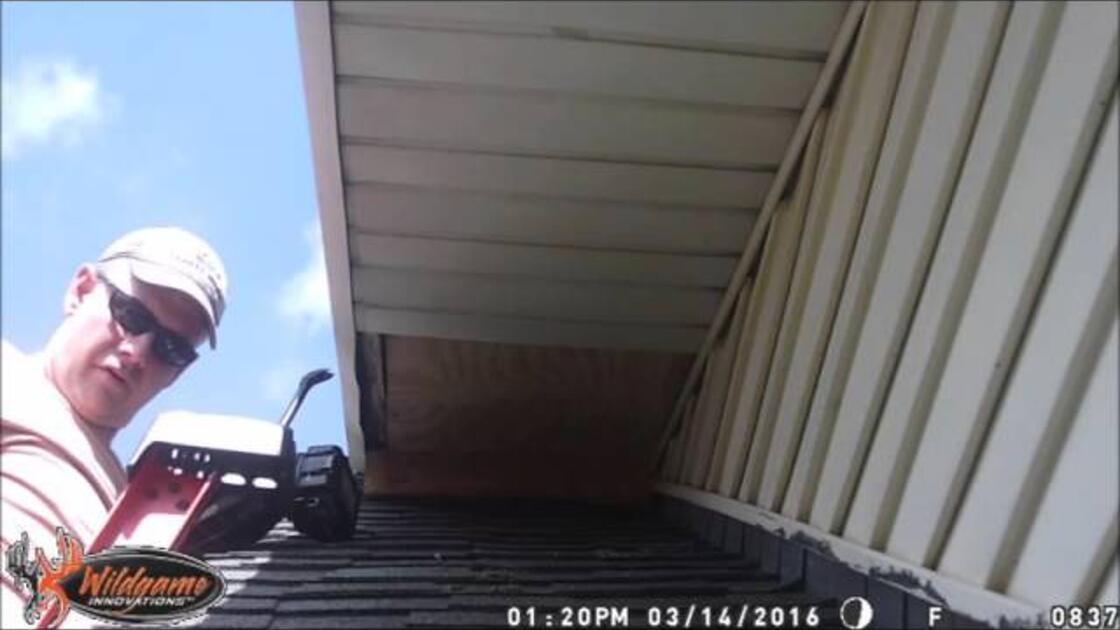
Video: Soffit fix for squirrels and raccoons, from Frontline Animal Removal.
How a San Diego exclusion job runs
Sealing is the center of the sequence, with trapping running on either side of it.
-
Free inspection
Whoever attends walks the eave, the attic, the crawl space and the yard, and writes up every opening a quarter inch or larger with the closure each one needs.
-
Traps set first
Snap traps go on the active runs before anything is closed, so the animals already inside are caught during the week the sealing is done.
-
Metal at every opening
Bird stops under the tile, hardware cloth at eaves and vents, foundation vents screened, garage sweep and weather stripping fitted, penetrations collared.
-
Trap checks continue
Traps are checked and cleared on a schedule until several nights pass with nothing taken and the attic shows no fresh droppings.
-
Closure list delivered
The homeowner receives a written list naming each opening and the material used, with the bridges to trim and any attic work still to do.
Why San Diego homeowners route sealing work through us
The county's material standard, on every job
The contractors we route seal with the quarter-inch 18 to 22 gauge hardware cloth and the metal weather stripping that County Vector Control recommends, and with manufactured metal bird stops on tile eaves, the closure the US Department of Energy lists among its measures for tile roofs. Foam is a filler behind metal and never the closure itself. A homeowner can check the material against the county's own guidance before the work starts and against the closure list after it.
Quarter-inch 18 to 22 gauge hardware cloth and metal weather stripping (County of San Diego Vector Control)
Both zones of a San Diego house
A raised-foundation house has a roofline and a crawl space, and the sealing scope we route covers both: the tile eave, open eaves, vents and penetrations above, and the foundation vents, sill line and hatch below. That is the difference between an exclusion job written for slab-built markets and one written for Mission Hills, Kensington and North Park. UF/IFAS gives a quarter inch as the rat-proofing standard, and it is applied at ground level as strictly as at the eave.
Quarter-inch rat-proofing standard (University of Florida IFAS Extension)
Sealing quoted as its own line
Every quote a homeowner receives after the free inspection separates the sealing from the trapping and from any attic work, with the material named at each opening, so the exclusion line can be compared against HomeGuide's 2026 national band of $500 to $2,500 for full-home work. Warranty terms are written on the quote where a contractor offers them. The company doing the work holds the Structural Pest Control Board Branch 2 registration, checkable by PR number at pestboard.ca.gov.
Full-home exclusion $500 to $2,500 national (HomeGuide 2026)
What Reddit Says About Rodent Exclusion in San Diego
Sealing is the part of a rat job that homeowners on Reddit understand least going in and defend hardest afterward. The threads are full of people who paid for trapping, heard silence for a month, and then heard the ceiling again the next fall, and the advice they give each other is that trapping without sealing is a subscription. Sticker shock about exclusion almost always comes from a bundled quote where the homeowner could not see what the sealing line was or why it existed.
The vetting advice is to get several bids for identical scope, to insist that trapping, sealing and cleanup are separate lines, and to ask whether the company does the repair work itself or only sets traps. Local operators are preferred over national brands throughout. People warn each other about quotes that fold a long monitoring contract into a removal, about companies that seal without trapping and shut animals inside, and about the reverse, trapping for months with nothing ever closed.
The questions they tell each other to ask are specific: what is included and what is extra, whether the sealing carries a warranty and whether it renews or ends, how many follow-up visits come with it, and what happens if the animals return. Expanding foam is a recurring joke, and the consensus is that anything a rat can chew is a delay and anything it cannot is a repair.
Under all of it is a family that has stopped sleeping and been told by someone that a rat in the attic is no big deal. The threads treat sealing as the moment the house stops being open.
For a San Diego house the bridge is short. The poison plans those threads argue over are largely prohibited at a home under AB 1788 and AB 1322, so the exclusion the threads recommend is also the program the state has left in place.
A typical exclusion call from a tile-roof house in San Diego
The situation: A two-story 1980s stucco house in Scripps Ranch with a concrete S-tile roof and a queen palm at the side yard whose skirt brushes the gutter. The owners had traps set by a previous company two autumns running and were told the second time that the rats were coming from the neighbors. They have started hearing the ceiling again in late October, and one of them is sleeping on the couch downstairs to get away from it.
What gets done: Whoever attends walks the eave from a ladder and finds the foam closures under the first tile course crumbled along most of the rear elevation, with two of the original metal bird stops crushed flat at the corners. The line-set hole beside the air conditioner is chewed to twice its size, and the garage sweep has a corner gap. Snap traps go on the joist runs above the upstairs hall on the first visit. On the second, a manufactured ventilated metal bird stop goes in along the whole rear eave and the corners, the line set gets a metal collar packed in mortar, the garage gets a new sweep and metal weather stripping, and the palm skirt is noted for a tree crew. No bait is used; the contractor explains that the anticoagulants a previous company might have used are no longer legal at a home.
How it turns out: Two adults come out in the first four nights and the traps stay quiet after that. The follow-up visit finds the closures holding and no fresh droppings, and the owners receive a closure list naming the eave, both corners, the line set and the garage with the material at each. The couch goes back to being a couch.
Exclusion questions from San Diego homeowners
These come from the phone line and from homeowner threads about sealing rats out.
Can I do the sealing myself with hardware cloth from the hardware store?
A homeowner can close a good deal at ground level with quarter-inch galvanized hardware cloth screwed to framing, a new garage sweep and mortar around a pipe, and County Vector Control's free outdoor inspection and starter kit will point at the places to start. The roofline is harder. A tile eave needs a manufactured bird stop fitted under the first course, open-eave bays need mesh cut to each one, and the whole thing needs a ladder and someone who knows where a roof rat tests. The free inspection separates the openings a homeowner can close from the ones that need a contractor.
Does sealing the eaves and vents block the attic ventilation?
Done with the right parts it does not. Quarter-inch hardware cloth passes air and stops the animal, and ventilated bird stops are made with weep holes so a tile eave keeps breathing. What blocks ventilation is foam sprayed into the eave, which is one more reason it is the wrong closure. A San Diego attic under tile runs hot from June through October, and the contractor we route keeps every vent working while closing it to anything a quarter inch or larger.
How long does an exclusion job take on a San Diego house?
Most single-story houses are sealed in one visit, with the trapping running for a week or two around it and a return visit to confirm. A two-story tile roof with a long missing bird stop, several open-eave faces, a crawl space with many vents and a palm to note can take a second day. HomeGuide's 2026 figures put trapping a few animals at two to three days and a severe infestation at one to two months, and sealing early is what keeps a job at the short end.
Does the sealing carry a warranty, and does it renew or run once?
Warranty terms come from the contractor who does the sealing, and the thing to ask for is the term in writing, what it covers, and whether it renews. Some cover a reseal only, some include a trapping visit if animals get back in, some run for a fixed term and end, and some renew for a fee. Ask before the work starts and get it on the quote. The closure list delivered at the end is what any warranty attaches to, so keep it with the house papers.
What happens if the rats come back after sealing?
A return after sealing means an opening was missed, a closure was damaged, or something new opened, and the first step is a roofline and crawl space walk to find which. Roof work, a fallen palm frond, a new cable run or a crushed bird stop from a ladder are the usual causes. Inside the warranty period, whatever terms you were given at the quote decide whether the reseal, and any fresh trapping, come at no charge. On a canyon-rim lot the supply outside is permanent, so a check of the closures each autumn is a good habit.
The sealing inspection is free and someone answers 24 hours a day.

Book a free exclusion inspection in San Diego
Call (619) 853-5729 or send the form. The line is answered 24 hours a day, and the inspection that prices the sealing costs nothing.