Attic Cleanup and Decontamination in San Diego, CA
Once the roof rats are out and the roofline is closed, the attic still holds their droppings, urine and nests. Cleanup removes the contamination and sanitizes the space. Licensed contractors handle every job we route.
- Cleanup after sealing, in that order
- Respirators and HEPA vacuums
- Free attic inspection first
What attic cleanup and decontamination in San Diego includes
Attic cleanup in San Diego is the removal of everything the roof rats left behind, followed by sanitizing of the framing and decking, and it is done after the trapping and sealing so the attic stays clean. On a San Diego house the work happens in an attic that is often low, hot and wired through with the ducting for the air conditioning, which shapes how it is done.
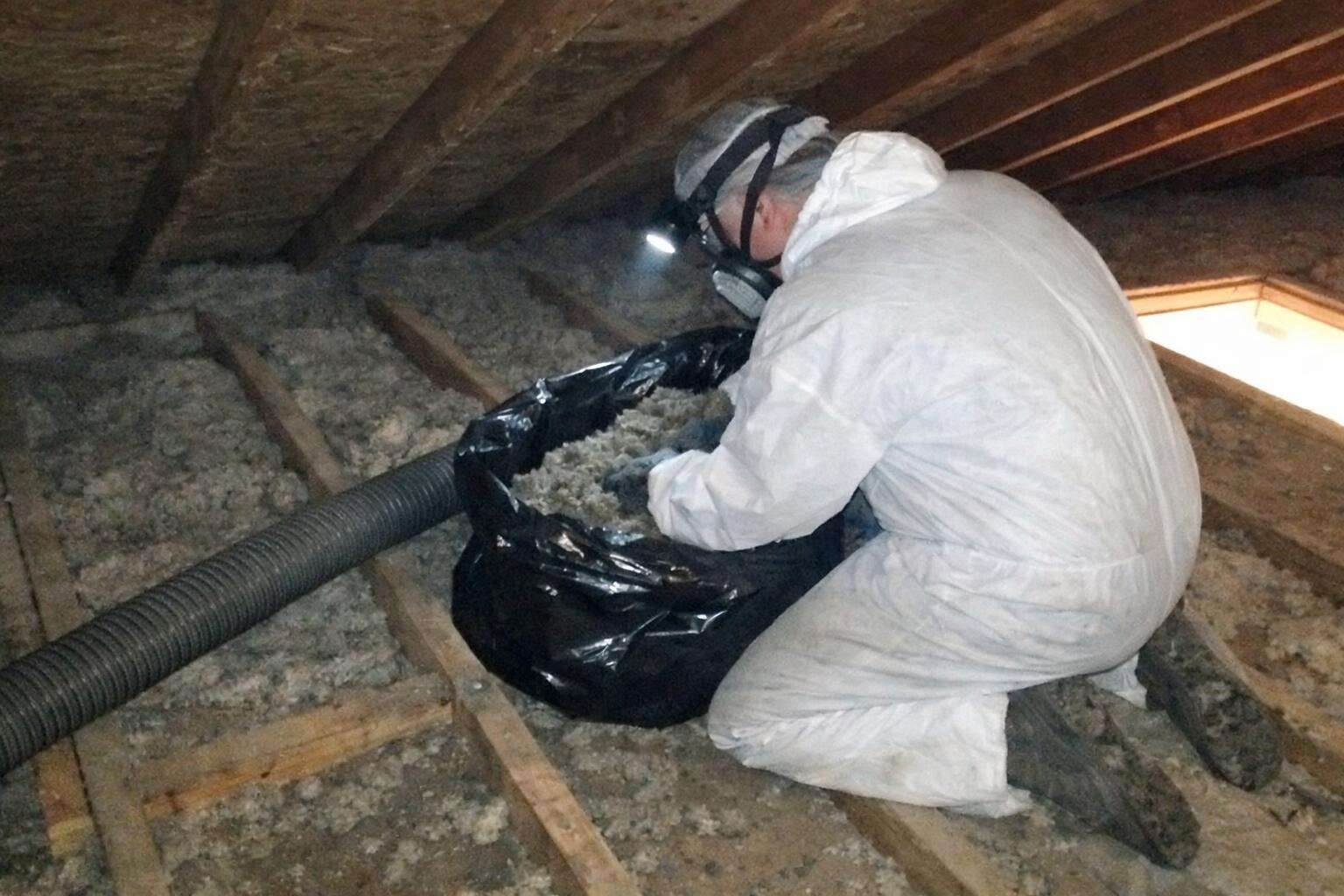
The contractor we route treats the job as contamination control. Whoever attends works in a disposable suit, gloves and a respirator, bags the waste inside the attic and carries it out sealed, and runs a HEPA vacuum over the joists and decking before any sanitizing product goes on. The trapping that comes first is covered on the roof rat removal page and the sealing on the rodent exclusion page.
- Removal of droppings, urine-stained material and nests from the joist bays, along the top plates and around the ducting
- Removal of insulation that is soiled, compacted into runways or shredded for nesting, bagged in the attic
- HEPA vacuuming of the joists, decking, rafters and the tops of ceiling drywall
- Application of an antimicrobial sanitizer to the cleaned surfaces, by sprayer or fogger
- Odor treatment where urine has soaked into wood
- A check of the ducting for chewed flex duct and open joints, which are reported to the homeowner
- A written list of what was removed and what was treated
People who call about cleanup have usually already lived through weeks of scratching overhead and a stretch of poor sleep, and the attic feels like a part of the house they no longer own. Cleaning it out is the step that gives it back.
Signs the attic needs cleanup after rats
An attic needs cleanup when droppings, urine staining or nests are present, and the droppings are the easiest of the three to confirm from the hatch. The University of Florida extension service (UF/IFAS) describes roof rat droppings as a quarter to half an inch long, shaped like a small banana, with pointed ends. Fresh droppings are dark and pliable; older ones turn gray and break apart.
Where the droppings sit tells the story. Roof rats run the same lines night after night, so the droppings collect along the top plates at the eaves, on the flat tops of ducting and beside the attic hatch. Urine shows up as a dark stain on the decking and, on a hot afternoon, as an ammonia smell that drifts down through the ceiling can lights. Nests are wads of shredded insulation, paper and palm fiber tucked into the corners of joist bays or under the ducting.
- Droppings a quarter to half an inch long with pointed ends, in lines along the framing
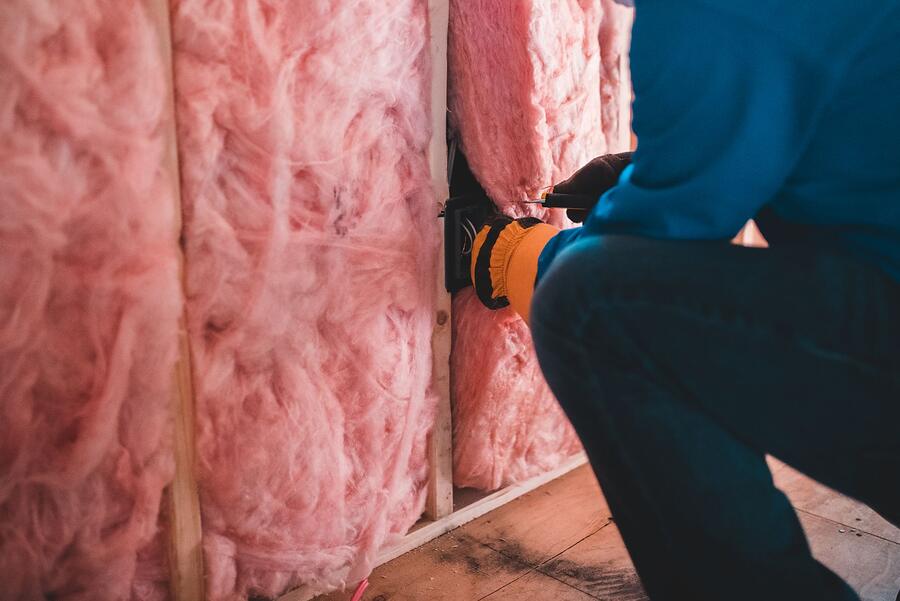
- Insulation flattened into runways or tunneled through
- Dark staining on decking, trusses or the paper face of batts
- An ammonia or musky smell strongest on warm days
- Shredded insulation packed into corners or around pipe penetrations
- Gnawed flex duct or wire insulation
Seeing droppings in an attic is also a diagnosis, because the same figure separates a rat job from a mouse job. The free rodent inspection reads all of this before anything is quoted.
Why cleanup follows sealing
Cleanup comes last because a clean attic with an open roofline is a clean attic for about a week. Roof rats in San Diego arrive from palms, ivy and canyon slopes along the same branches and utility lines every season, and an attic that has been used once carries the scent trails that draw the next animals to the same eave gap. Sanitizing removes the trail; only the sealing removes the way in.
The sequence on the jobs we route is fixed. Traps go in and stay until the attic goes quiet. The roofline is closed with quarter-inch hardware cloth, sheet metal and, on a tile roof, a manufactured bird stop under the first course of tile. Then the cleanup crew goes in. Doing it in this order means the crew is working in an attic that will stay the way they leave it, and it means the homeowner pays for the cleanup once.
A company that offers to clean and sanitize before the sealing is done, or that skips the trapping and goes straight to fogging, is selling the part of the job that looks finished. Ask which step is on which visit.
Do I need to worry about hantavirus in a San Diego attic?
Hantavirus is a low risk from a roof rat attic, and the respirator worn during cleanup is there for the general contamination of dried droppings, urine and dust. Most hantavirus cases in the United States occur in the rural West, and the carrier is the deer mouse, an outdoor field species. The animal in a San Diego attic is almost always the roof rat, which is a different species with a different history.
That does not make the attic safe to clean bare-handed. Dried rodent waste breaks into fine dust when it is swept, and the Centers for Disease Control and Prevention describes rodents as carriers of many diseases that spread directly through urine, droppings, saliva and bites, and indirectly through the fleas, ticks and mites that fed on them. A respirator, gloves, a suit, wetting down the waste before it is moved and HEPA vacuuming instead of sweeping are the correct precautions on those grounds, and they are the ones whoever attends takes.
The practical advice is short. Do not sweep or dry-vacuum an attic yourself, keep children and pets out of it until it is done, and treat a company that leads with a hantavirus scare on a roof rat job as one that has not read the species.
Will you clean up and decontaminate, or only trap?
Cleanup and decontamination is a separate service that is quoted on its own line, and whether a company offers it at all is one of the first things to ask. Homeowners in forum threads tell each other to ask it before signing, because plenty of pest companies trap and seal and leave the attic as they found it, and the homeowner discovers the droppings and the smell later.
Every company we route to a cleanup job does the removal, the vacuuming and the sanitizing, and quotes it apart from the trapping and sealing so the three numbers can be compared. When the insulation has to come out and go back in, that becomes a fourth line, covered on the attic insulation replacement page, and the installation is routed to a contractor holding the Contractors State License Board license the work requires.
The honest answer to how much cleanup an attic needs is that it depends on how long the rats were there. A few weeks of activity along one eave may need a vacuum and a spray. A season of nesting through a whole attic needs the insulation out.
Vacuuming, sanitizing and fogging compared
The methods that work in an attic are removal by hand and HEPA vacuum followed by a surface sanitizer, and fogging on its own is a finish that only makes sense after the removal. Each method does a different job, and a quote should say which are included.
| Method | What it does | What it leaves behind |
|---|---|---|
| Hand removal and bagging | Takes out nests, soiled insulation and loose debris | Fine dust and staining on the framing |
| HEPA vacuuming | Lifts droppings and dust from joists, decking and duct tops without raising it into the air | Urine soaked into wood; odor |
| Antimicrobial spray | Sanitizes the cleaned surfaces on contact | Nothing, on a surface that was cleaned first |
| Fogging | Carries sanitizer or deodorizer into the whole air space and onto surfaces the sprayer misses | Everything, if it is done over droppings and soiled insulation that were never removed |
| Odor sealer on wood | Locks in urine odor on decking that cannot be replaced | Used where staining is heavy and the wood stays |
The order matters more than the products. Remove, then vacuum, then sanitize. A quote that lists a fog and a spray with no removal line describes an attic that will smell the same the next warm afternoon.
Crawl-space cleanup under raised San Diego houses
Crawl-space cleanup is a real line item in San Diego because a large share of the pre-war houses sit on raised foundations, and roof rats that come in at a foundation vent use the crawl space the way they use an attic. The Craftsman and Spanish Colonial Revival houses of Mission Hills, Kensington, Talmadge, North Park, South Park, Golden Hill, Hillcrest, University Heights and Normal Heights are the typical cases.
The work is the same in principle and harder in practice. The crawl space is low, the soil is bare, and the insulation under the floor, where there is any, hangs in batts between the joists and collects the droppings that fall from above. Whoever attends removes soiled batts, vacuums the joists and subfloor, bags the waste and sanitizes. Foundation vents are screened with the quarter-inch, 18 to 22 gauge hardware cloth the county recommends before the crawl space is cleaned, for the same reason the attic is sealed first.
The national cost guides price crawl-space cleanup as its own line, and while newer stock across much of the country is slab-built, that line applies to a good part of San Diego. The Mission Hills and Kensington and Talmadge pages cover the houses where it comes up most.
What attic cleanup costs in San Diego
Attic cleanup and decontamination runs $600 to $2,500 as a national typical-job band in HomeGuide's 2026 figures, reaching about $4,000 for a severe attic, and the free inspection produces the itemized number for a specific house. There is no published San Diego cost survey, so every figure below is national and labeled as such.
| Line item | National band (HomeGuide 2026) |
|---|---|
| Attic cleanup and decontamination | $600 to $2,500; up to about $4,000 severe |
| Insulation removal and replacement | $2.50 to $5.50 per sq ft |
| Trapping and removal beforehand | $250 to $1,200 |
| Full-home exclusion beforehand | $500 to $2,500 |
| Standalone inspection | $0 to $175; free here |
What moves a cleanup quote inside the band is the amount of material that has to leave the attic and how hard it is to get to. A single eave line of droppings over a garage is the bottom of the range. A whole attic of blown-in insulation tunneled through over a season, under a low hip roof with ducting in the way, is the top. A crawl space adds its own line. Chewed flex duct that has to be replaced is a separate trade and a separate quote. Ask whether the sanitizer application is included in the cleanup price or listed apart from it.
Attic cleanup on San Diego housing
The San Diego attic that needs cleanup is usually one a roof rat reached from a palm, an ivy slope or a canyon, and the era of the house decides what the crew finds when they open the hatch.
Pre-war houses with clay tile and crawl spaces
Under the clay tile of a Mission Hills or Kensington house the attic is often unfloored, with old batts or no insulation at all, open eaves and a crawl space below. The cleanup is two spaces, the sealing includes the foundation vents and the sill line as well as the tile eave, and the bird stop under the first course of tile is the part that closes the roofline.
Ranch houses of the 1940s to 1960s
In Clairemont, Serra Mesa, Allied Gardens, Del Cerro, Bay Park and Point Loma the ranch attics are low, the eaves are open and the lots often back onto a canyon finger. These attics are hot to work in and the low pitch means the crew is on their stomachs at the eaves, which is where the droppings are.
Stucco and concrete tile from the 1970s onward
Tierrasanta, Mira Mesa, Rancho Penasquitos, Scripps Ranch and Rancho Bernardo have deeper attics with blown-in insulation, which roof rats tunnel through and which usually has to come out once it has been nested in. The way in is a missing or crushed bird stop at the eave, and the Scripps Ranch page goes into that stock.
Season and the law
Cleanup calls cluster from late winter into spring, after the October to February indoor peak and after the first autumn rains and the holidays have sent people into the attic for decorations. Because AB 1788 and AB 1322 have taken the anticoagulant baits off the residential table in California, the attic is cleared by trapping, and a cleanup crew rarely has to find a poisoned carcass first; when one is there from an older bait job, the dead rodent removal page covers it. The trapping and sealing are Branch 2 work under the Structural Pest Control Board, and every company we route holds the Branch 2 registration that work requires.
What to ask before booking attic cleanup
A cleanup quote should list removal, vacuuming and sanitizing as separate items, say whether insulation is coming out, and come from a company whose PR number can be checked, and a quote missing any of those is a fog-and-go. Ask before the crew is booked.
- What is the company's PR number with the Structural Pest Control Board, and does it check out at pestboard.ca.gov?
- Is the trapping finished and the roofline sealed before the cleanup visit is scheduled?
- Does the price include removal of soiled insulation, or only vacuuming and spraying?
- Which sanitizer is used, and is it applied by sprayer to cleaned surfaces or fogged over everything?
- Will the crew report chewed ducting and wiring, and who repairs it?
- If insulation goes back in, which contractor installs it and what CSLB license do they hold?
- What does the exclusion warranty cover, for how long, and is a return visit included?
Warranty terms belong to the contractor who did the sealing, so get them in writing on the same paperwork as the cleanup. The about page lays out what the routed contractors are expected to put on a quote, and the contact page has the number and the form.
Services that usually go with this one
A San Diego rodent job is a sequence, and these pages cover the steps on either side of this one.
- Attic Insulation Replacement: Compressed and urine-wet insulation removed and new material installed by a CSLB-licensed contractor.
- Rodent Exclusion: Closing tile eaves, open Craftsman rooflines, crawl-space vents and utility gaps to the quarter-inch standard.
- Dead Rodent Removal: Finding the carcass behind the smell, removing it, and closing the route it used.
How the steps fit together is set out on the about page, and the phone line answers the rest at any hour.
Handling droppings safely
The precautions that come before any cleanup.
Video: How to safely clean rodent droppings, from Straight To The Point.
How an attic cleanup runs in San Diego
The attic is cleaned once the rats are out and the roofline is closed, so the work holds.
-
Attic and roofline inspection
Whoever attends reads the attic for dropping lines, nests and soiled insulation, walks the eaves for the openings in use, and quotes trapping, sealing and cleanup as separate lines.
-
Trap and seal first
Snap traps stay in until the attic is quiet, and the roofline is closed with hardware cloth, sheet metal and a metal bird stop on tile, so the cleanup is done once.
-
Remove and bag
In suits and respirators the crew wets down the waste, removes nests and soiled insulation, bags it in the attic and carries it out sealed.
-
Vacuum and sanitize
A HEPA vacuum clears the joists, decking and duct tops, then an antimicrobial goes onto the cleaned surfaces, with odor treatment on any stained wood.
-
Written record
You receive a list of what was removed, what was treated and any chewed ducting or wiring found, for the house papers and for whoever installs new insulation.
Why San Diego homeowners route attic cleanup through us
Cleanup only after the roofline is closed
The contractor we route schedules the cleanup visit after the trapping has gone quiet and the sealing is done, so the sanitized attic stays that way. Roof rats reach a San Diego roof from palms, ivy and canyon slopes on the same routes every season, and a clean attic with an open eave gap is refilled by the next animals. The order of the visits is written on the quote, and a homeowner can see which step comes when before anything is booked.
County of San Diego Vector Control: the roof rat is the most common rat in the county and climbs to get in
The species read before the risk is sold
Whoever attends identifies the animal from the droppings and the runs before quoting the cleanup, using the UF/IFAS description of roof rat droppings, a quarter to half an inch long with pointed ends. That read decides whether the attic needs a vacuum and a spray or the insulation out. It also decides what the respirator is for: the general dust of a rodent attic, since the deer mouse that carries hantavirus in the rural West is an outdoor field species and a different animal from the one in a San Diego attic.
UF/IFAS: roof rat droppings measure a quarter to half an inch, banana shaped, with pointed ends
Priced against a national band, in separate lines
HomeGuide's 2026 national figures put attic cleanup and decontamination at $600 to $2,500, with a severe attic reaching about $4,000, and the quote you receive puts removal, vacuuming, sanitizing and any insulation work on their own lines against that band. There is no San Diego cost survey to cite, so the figures are labeled national and the free inspection produces the number for your house. Forum threads are full of bundled quotes nobody could compare; itemizing is the answer to that.
HomeGuide 2026 national: attic cleanup and decontamination $600 to $2,500
What Reddit Says About Attic Cleanup in San Diego
Attic cleanup is the part of a rodent job homeowners in r/pestcontrol and r/HomeImprovement discover they were never quoted for. The advice they give each other is to ask, before signing, whether the company will clean up and decontaminate or only trap, and to get the cleanup as its own line so it can be compared across bids. Several bids for the same scope is the standard advice, and local operators are preferred over national brands.
The red flags people warn about are a company that fogs and sprays over droppings and insulation that were never removed, a cleanup sold before the sealing is done, and quotes that bundle a monthly monitoring contract into a one-time job. The wide spread of real quotes in the threads, from under two thousand dollars to tens of thousands for work described the same way, is the thing that makes people ask whether they are being taken advantage of.
The questions they pass along are practical. What exactly is included, and what is a separate line? Does the price cover pulling soiled insulation, or only vacuuming? Who installs the new insulation, and are they a licensed contractor? How many follow-up visits are included, and what happens if the rats come back? Rodent mites after the animals are gone come up as an aftermath problem nobody warned them about, which is a point in favor of a real sanitizing pass.
Under all of it is the same register: people who have not slept in weeks and have been told by friends that they are overreacting. The clean attic is where that stops.
The contractors we route quote cleanup on its own line, schedule it after the sealing, and put the sanitizer and the insulation decision in writing before the crew goes up.
A typical attic cleanup call from a Clairemont ranch house
The situation: A couple in a 1950s ranch house in Clairemont, on a lot that backs onto a canyon finger, had roof rats trapped out of the attic in January and the open eaves screened with hardware cloth in February. By April the ammonia smell through the hallway can lights is worse on warm afternoons, and when they lift the hatch the batts along the canyon-side eave are flattened into runways and dotted with pointed droppings a quarter to half an inch long.
What gets done: Whoever attends confirms the sealing is holding, then works the low attic on their stomach in a suit and respirator, wetting down the waste, pulling the soiled batts along the canyon-side eave and around the furnace platform, and bagging them in the attic. A HEPA vacuum clears the top plates, the joists and the tops of the ducting, and a chewed section of flex duct is flagged for the homeowner. An antimicrobial goes onto the cleaned surfaces by sprayer and an odor sealer onto the stained decking above the hallway. The bare bays are listed for an insulation contractor.
How it turns out: The smell is gone by the next warm day, the homeowner has a written list of what came out and what was treated, the duct repair goes to an HVAC company as its own job, and the insulation replacement is routed to a contractor holding the CSLB license for it.
Attic cleanup questions from San Diego homeowners
These are the questions that come up on the phone line and in homeowner threads about cleaning an attic after rats.
Can I clean the attic myself?
A homeowner can handle a small, fresh area with gloves, a respirator, a spray bottle of disinfectant to wet the droppings first, and paper towels bagged as they go. Sweeping and dry vacuuming with a household vacuum are the two things to avoid, because both put the dust in the air. A whole attic with soiled insulation, a low pitch and ducting in the way is a different job: suits, a HEPA vacuum, bagged removal and a sanitizer applied by sprayer or fogger. The free inspection will tell you which of the two you have.
Does all the insulation have to come out?
Only the insulation that is soiled, tunneled or nested in has to come out, and on many attics that is one or two eave lines and the bays around the hatch and the ducting. Blown-in insulation that has been run through over a full season usually has to go, because the contamination is spread through it and cannot be vacuumed out. The crew separates what stays from what goes and lists both. Whatever comes out is replaced by a contractor holding the CSLB license for insulation work, on a separate quote.
How long does an attic cleanup take?
Most San Diego attics are cleaned in a single day, with the trapping and sealing done on earlier visits. A large attic with blown-in insulation coming out, or a house with a crawl space that needs the same treatment underneath, can take two days. HomeGuide's 2026 figures put the trapping that comes first at two to three days for a few animals and one to two months for a severe infestation, so the cleanup visit is scheduled once that stretch is over and the attic has been quiet.
Is it safe to be in the house during the cleanup?
Yes, with the attic hatch sealed off and the crew working above in suits and respirators. The dust is contained at the source by wetting the waste before it is moved and by running a HEPA vacuum instead of sweeping, and the bagged material leaves the house sealed. Children and pets are kept away from the hatch and from the truck. If a fogger is used, the crew will say how long the attic should stay closed afterward, and the rest of the house stays in normal use.
Will the smell go away?
The smell goes with its source. Once the droppings and soiled insulation are out and the wood is sanitized, the ammonia that drifted down on warm afternoons stops, and where urine has soaked into decking that stays, an odor sealer locks it in. A smell that persists after a proper cleanup usually means a carcass somewhere else, often in a wall from an older bait job, and that is a dead rodent removal call. A smell that returns weeks later means new animals, and the roofline needs another look.
The free inspection tells you how much cleanup the attic needs.

Book a free attic inspection in San Diego
Call (619) 853-5729 or send the form. Someone answers 24 hours a day, and the inspection that prices the cleanup is free.